
grass pellet machine
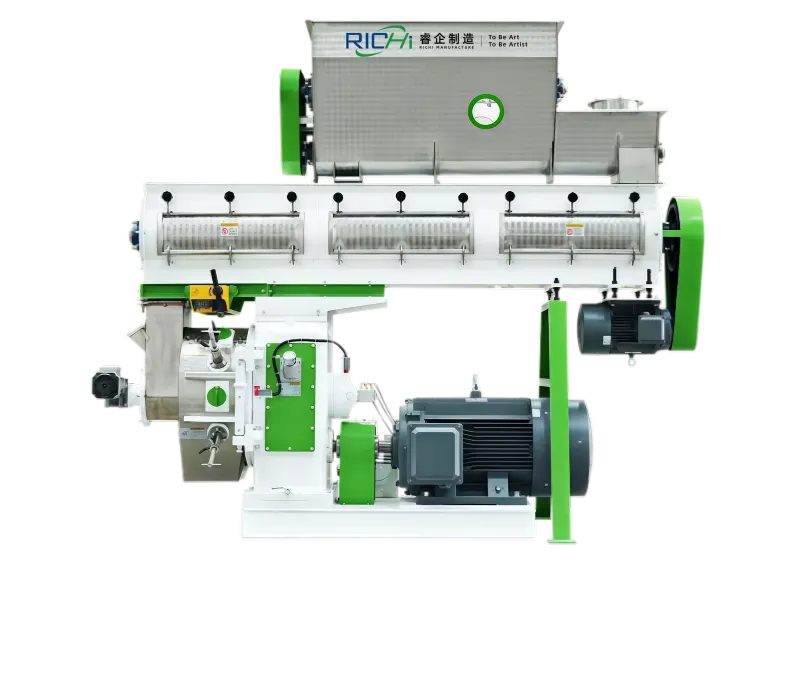
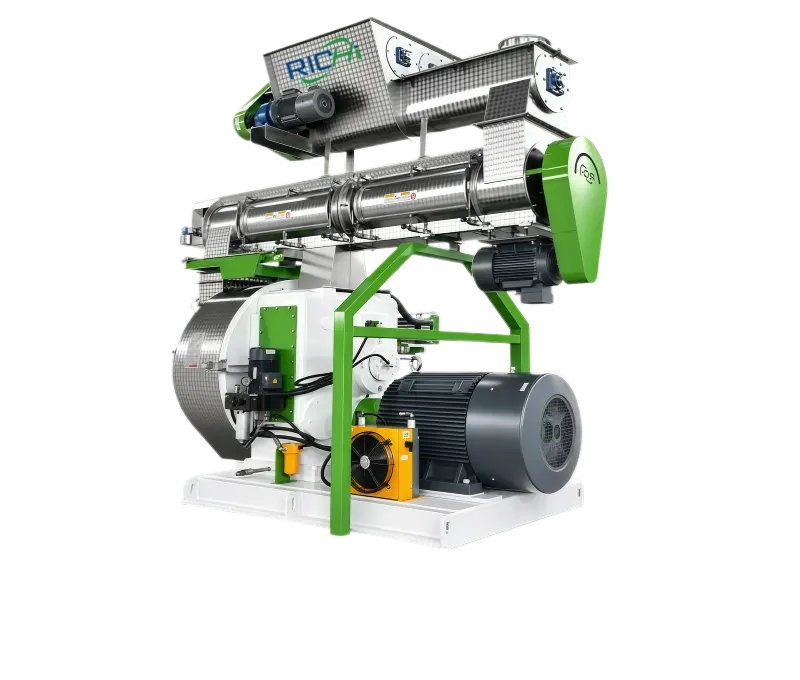
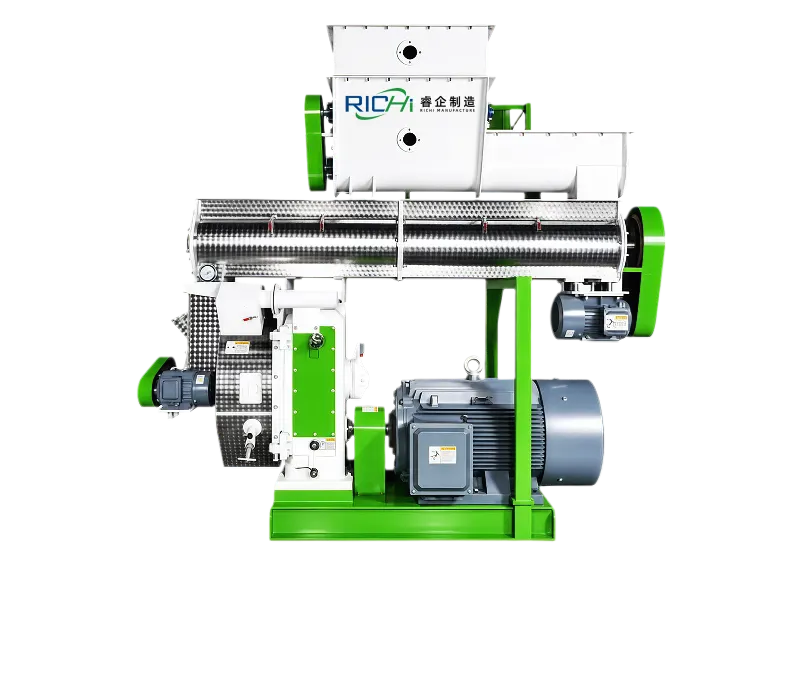
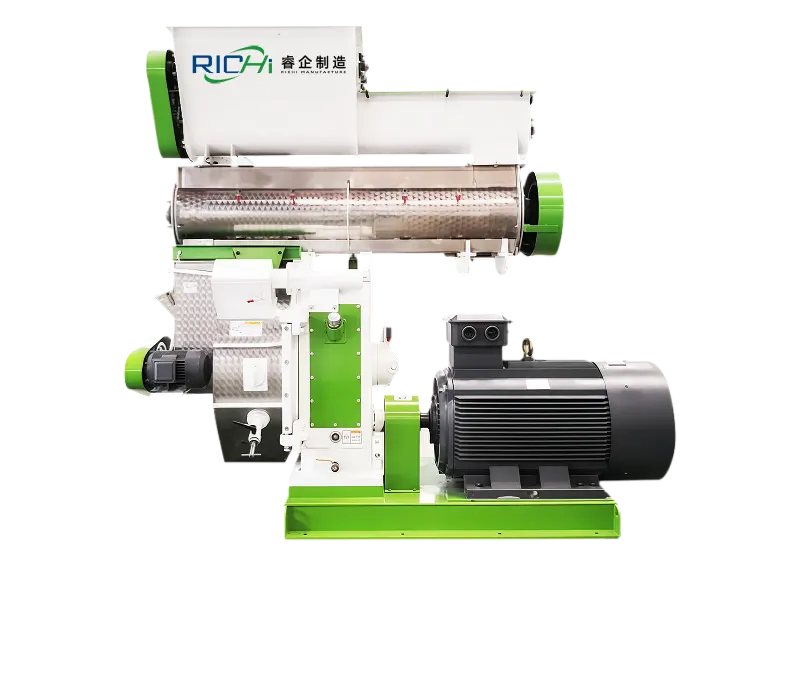
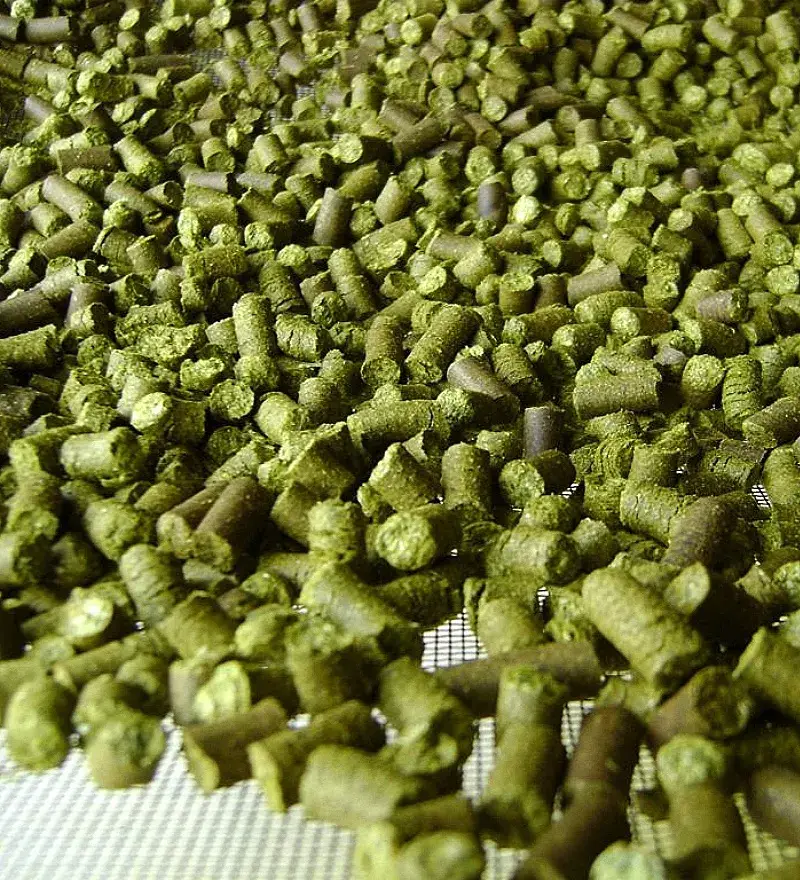
The grass pellet machine is designed for processing high-fiber forage. It can press alfalfa, hay, ryegrass, and other materials into feed pellets with good palatability that are easy to store. It is widely used in farms and feed processing plants.


Grass Pellet Machine for Sale
Loose grass is bulky, absorbs moisture easily, and cattle and sheep are picky eaters. When fed directly, the waste rate is quite high. The grass pellet machine solves this by processing fluffy forage into nutritionally balanced, high-density feed pellets that are easy to store.
This machine uses a ring die structure and is equipped with a conditioner. Before grass pelleting, steam softens the fiber and gelatinizes starch, so the pellets are denser and easier to digest. Single-machine capacity can be customized up to 40 t/h. It is suitable for small household farms and can also be used in industrial feed processing plants.
In addition, with only slight adjustments to the equipment configuration, this machine can also be used for biomass fuel pellets. For details, please refer to biomass pellet machine solution.
Capacity: 0.5-10 T/H
Size: 4-12 mm
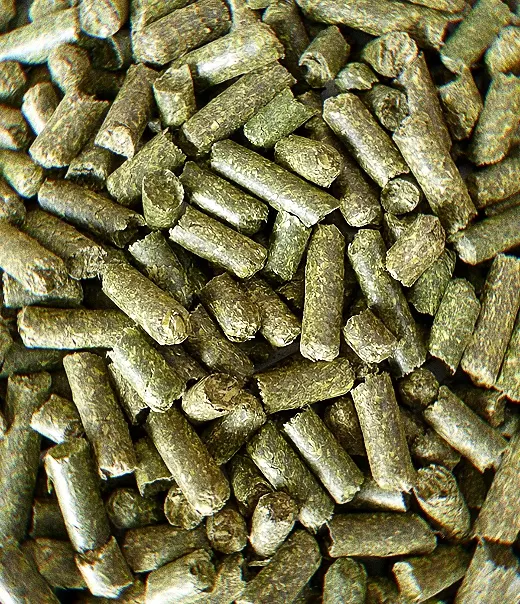
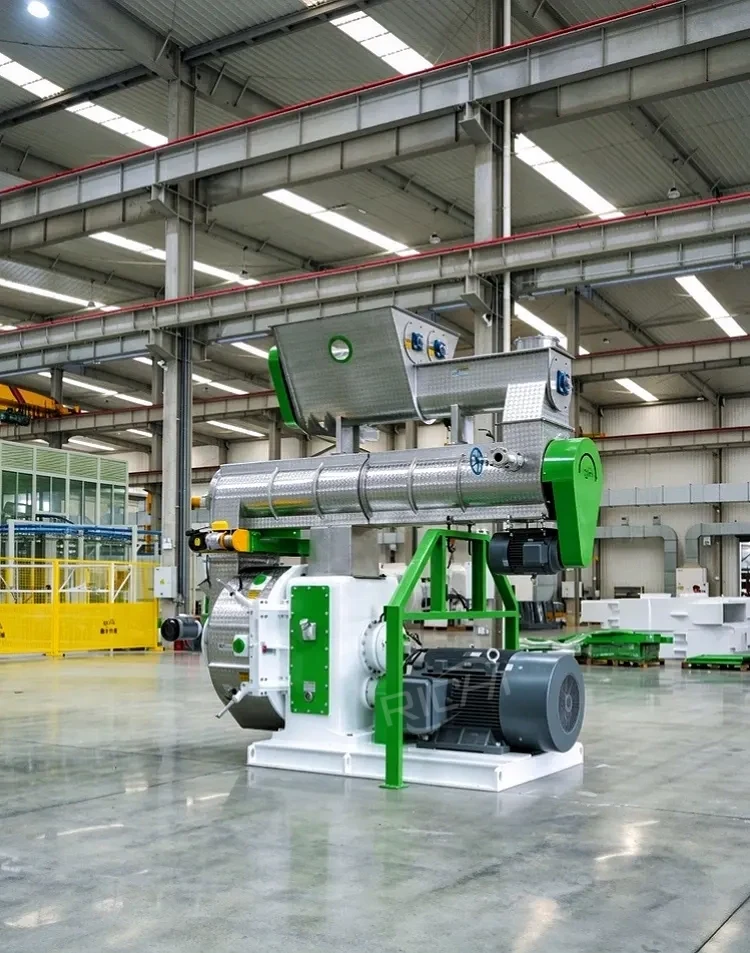
Design Highlights of the RICHI Grass Pellet Machine
From core components and transmission to feeding and safety maintenance, we have carried out systematic engineering optimization on the grass pellet making machine. Let’s look at the design highlights that help the machine maintain strong performance under high-fiber forage conditions.
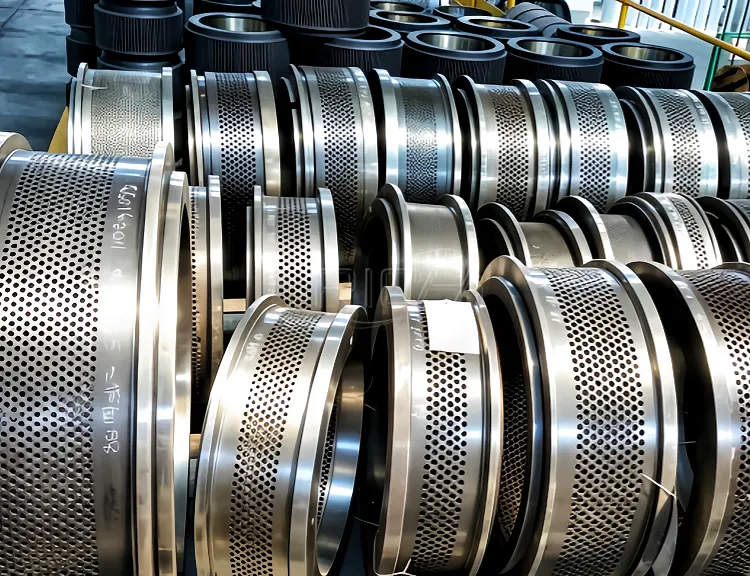
40CrMnTi High-Wear-Resistant Core Components
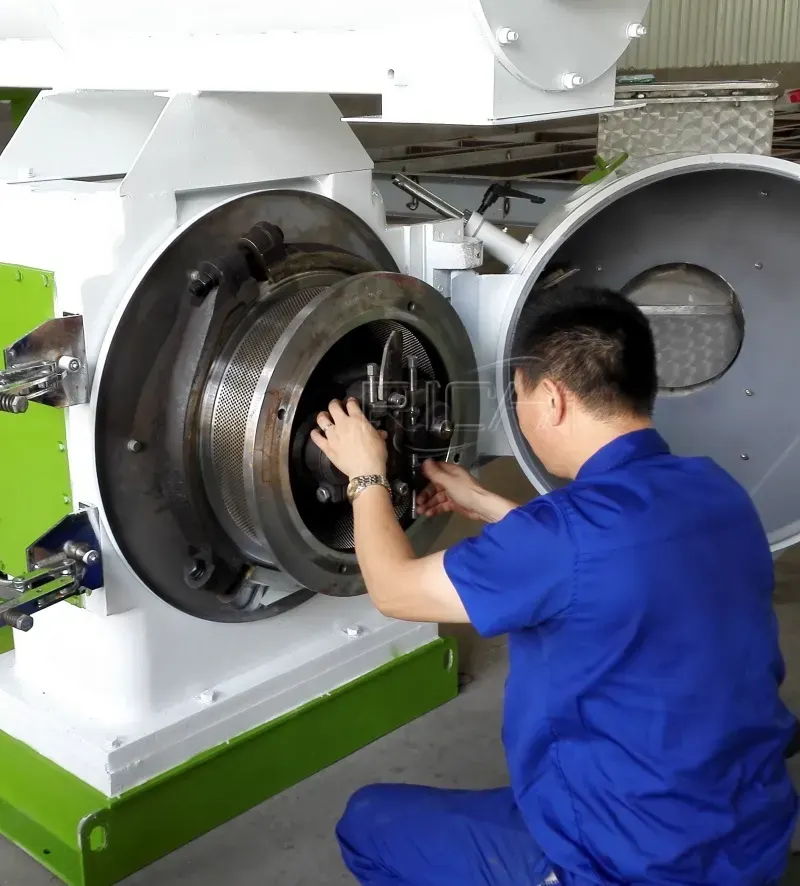
The ring die, the core component of the machine, is forged from 40CrMnTi alloy steel and undergoes deep carburizing and quenching. It can effectively handle the wear and impact caused by high-fiber forage.
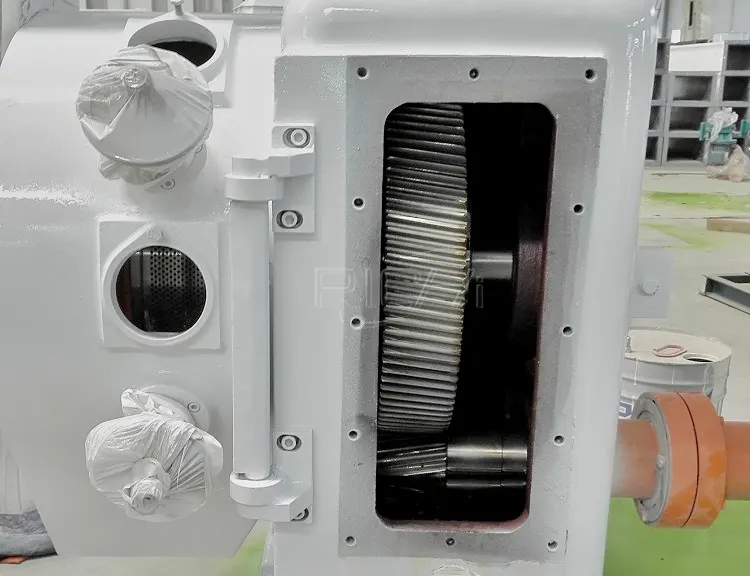
Gear Direct Drive Transmission
It abandons belt transmission, which slips easily. The main drive uses gear transmission and is paired with a Siemens high-efficiency energy-saving motor. With the same raw materials, the RICHI grass pellet machine has a shorter pelleting time, which means a lower electricity bill.
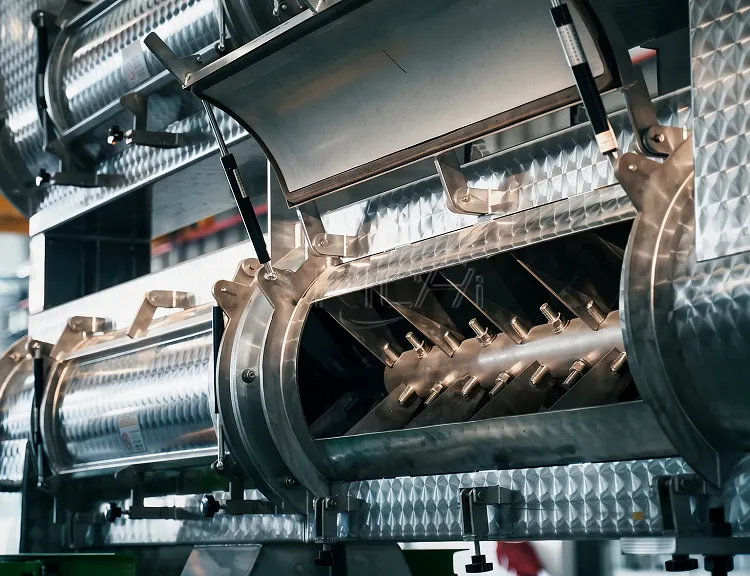
304 Stainless Steel for Food-Grade Contact
The feeding screw, conditioner, and main door cover, which come into direct contact with raw materials, are all made of 304 stainless steel. They resist corrosion and are easy to clean, helping ensure the finished pellets are clean and hygienic.
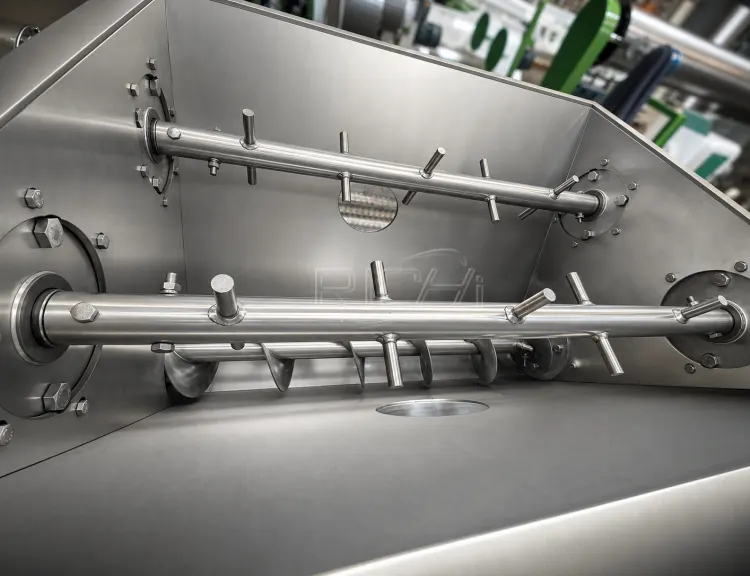
Anti-Bridging and Forced Feeding
The wide feed inlet, together with a variable-pitch anti-bridging mechanism in the feeding section and a variable-frequency feed motor, easily breaks up clumps in fluffy materials. A forced feeding device is also added to deliver materials steadily and evenly to the pelleting chamber.
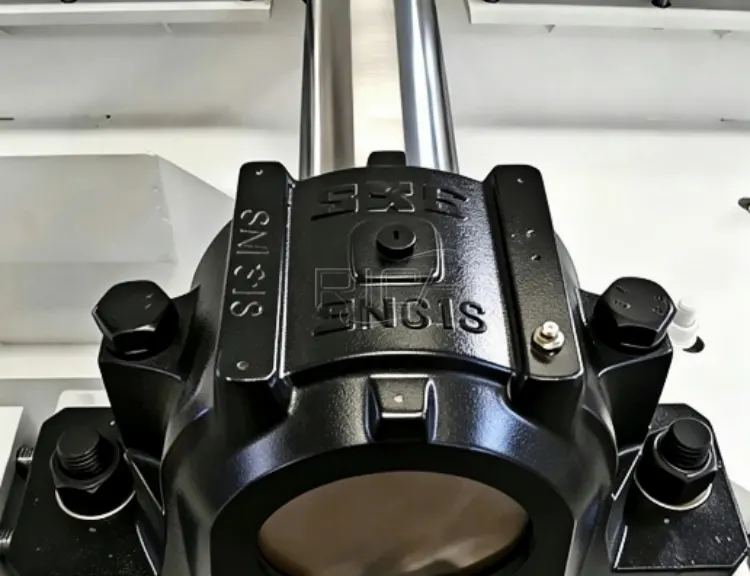
Long-Term Support with SKF Bearings
The heavy-duty frame is made of thickened steel plate and paired with SKF bearings, giving the whole machine higher structural strength and more stable support. You can also choose an automatic bearing lubrication system, which saves time and effort through automatic oil injection.
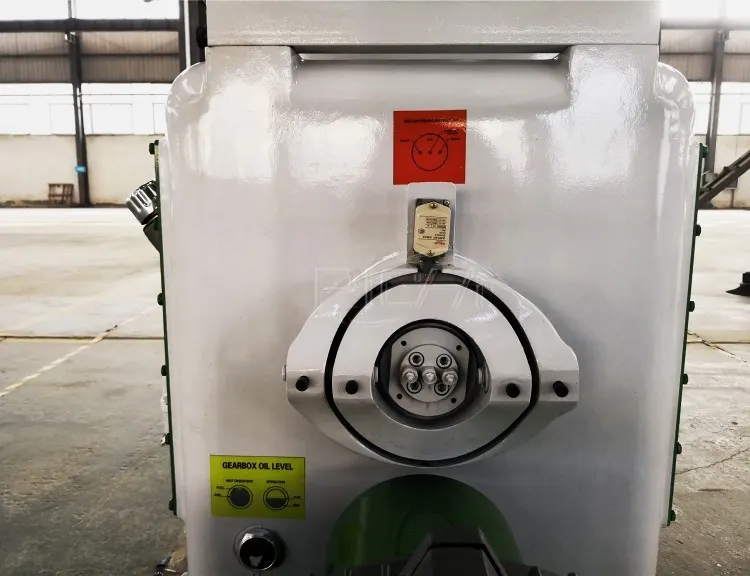
User-Friendly Protection and Maintenance
The transmission system is equipped with a safety pin. If production becomes abnormal, the safety pin breaks automatically to protect the gearbox and main motor from damage. Grass pellet machine uses a modular design, and key components are easy to remove.
Customizable Grass Pellet Machine
Are you planning to process alfalfa, hay, ryegrass, or Napier grass? Different grasses vary widely in fiber thickness, moisture, and protein content, so the conditioning parameters, ring die hole diameter, and compression ratio also differ. We can customize the design according to your project.

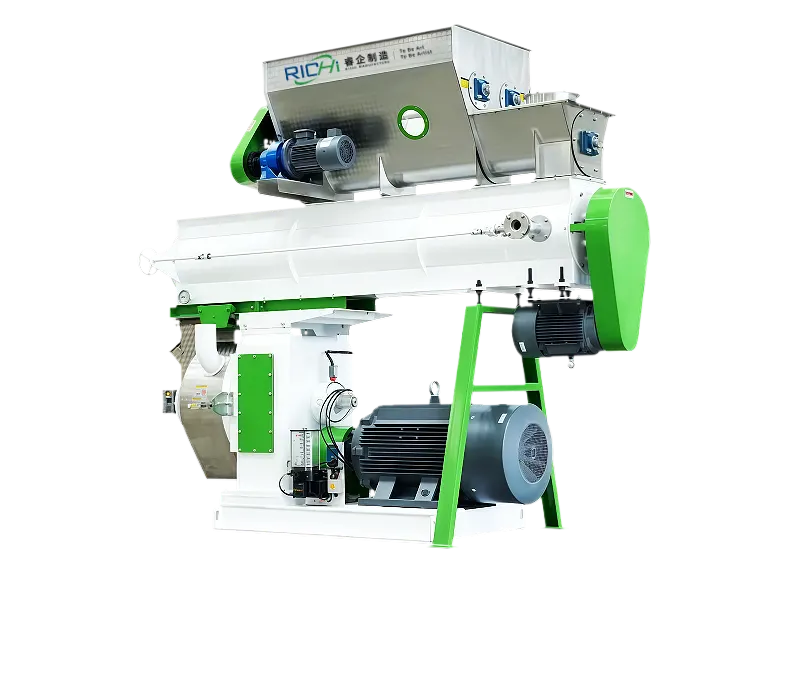

Models and Technical Specifications
The grass pellet machine for sale can handle multiple grasses after changing the ring die and conditioning parameters. Note that different raw materials vary in fiber hardness, bulk density, and oil content, so actual capacity will differ. Soft grasses such as alfalfa and ryegrass have higher capacity, while hard or low-bulk-density materials such as Napier grass and hay have relatively lower capacity.
| Model | Production Output (t/h) | Main Motor Power (kW) | Arch-Breaking Feeder Power (kW) | Forced Feeder Power (kW) | Ring Die Diameter (mm) | Finished Pellets Diameter (mm) |
|---|---|---|---|---|---|---|
| CZLH320 | 0.5-0.6 | 22 | 2.2 | 0.75 | 320 | 4-12 |
| CZLH350 | 1-1.2 | 37 | 2.2 | 0.75 | 350 | 4-12 |
| CZLH420 | 1.8-2 | 90 | 3 | 1.5 | 420 | 4-12 |
| CZLH520 | 2.8-3 | 132 | 3 | 1.5 | 520 | 4-12 |
| CZLH678 | 4-5 | 200 | 3 | 1.5 | 673 | 4-12 |
| CZLH768 | 6-8 | 250 | 4 | 1.5 | 762 | 4-12 |
Note: The data in the table is for reference only. In actual production, machine capacity fluctuates due to factors such as raw materials and formula. Contact RICHI engineers to discuss details.
How Does the Grass Pellet Machine Process Grass?
Some customers only know they need to buy a pellet machine to make feed, but after buying it, they find out the machine is for making biomass pellets. This is because they did not fully understand the machine before purchasing. Let’s look at how the grass pellet maker works and how it differs from a biomass machine.
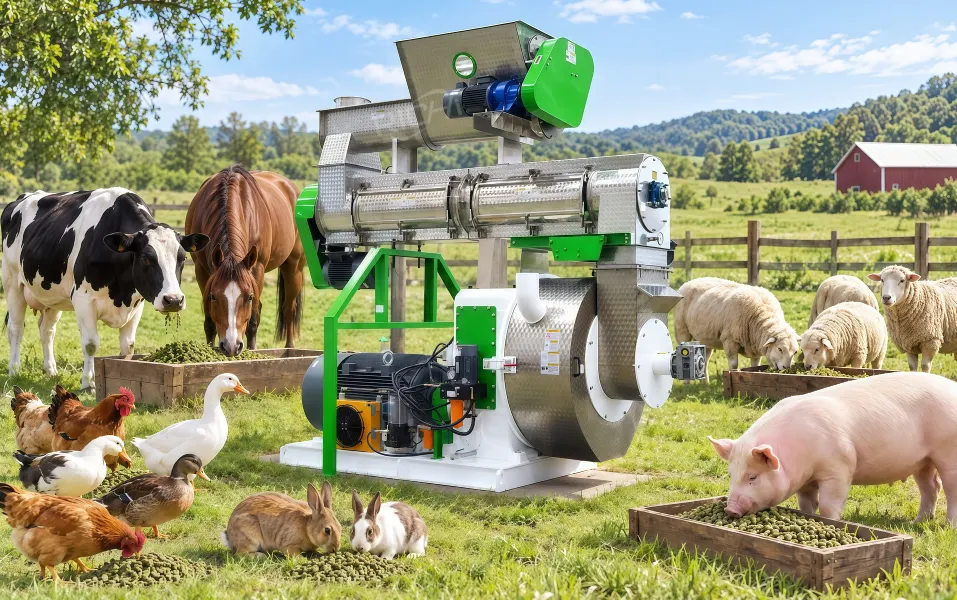
Working Principle of the Grass Pellet Machine
The machine has a stainless steel conditioner and requires a high-temperature conditioning step. This is the main difference between it and a biomass fuel pellet machine.
Grass meal enters the conditioner. High-temperature saturated steam kills bacteria and insects in grass seeds and softens and cooks the high fiber in the grass.
Then the material enters the pelleting chamber. Under the combined action of the ring die and rollers, it is extruded through the ring die holes into uniform cylindrical strands. The cutter cuts them into evenly sized pellets.
During grass pellet production, high-temperature cooking significantly improves the palatability of the grass, and the pellets are made according to a specific nutritional formula. Animals that eat them can produce more meat and milk.
For example, alfalfa pellets fed to laying hens can improve yolk color and meat quality, while sheepgrass and ryegrass pellets are common choices for winter supplemental feeding of cattle and sheep.

Why Choose the RICHI Grass Pellet Machine
What are the benefits of feed pellets compared with loose grass? Is buying a grass pelletizer really cost-effective? Take a look at what advantages our machine offers and what benefits it can bring you.
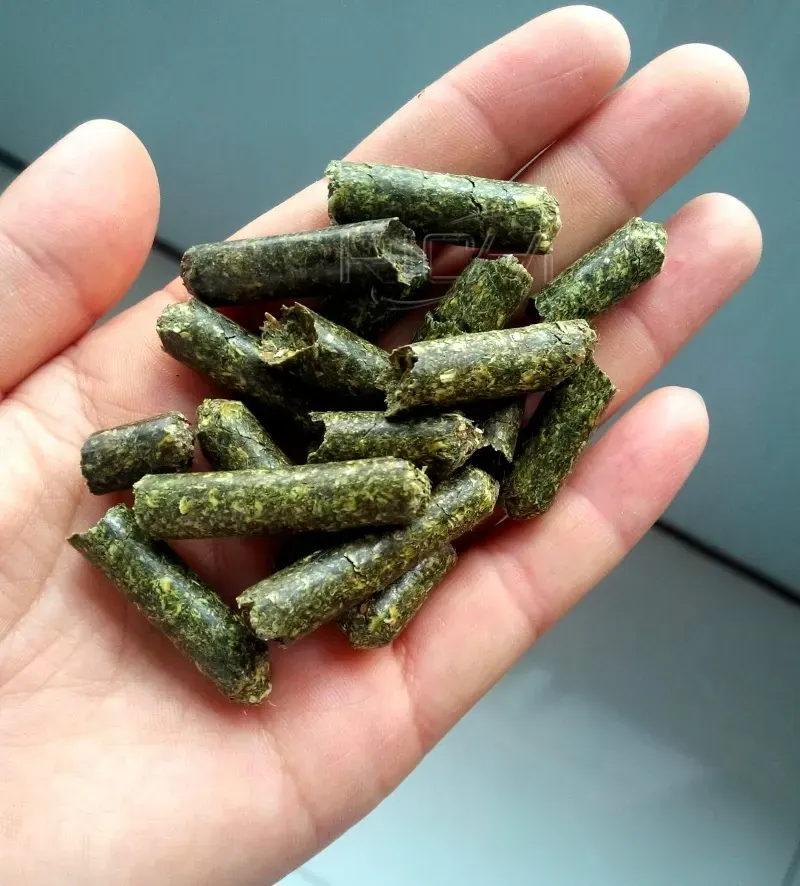
Forage Utilization Rate Close to 100%
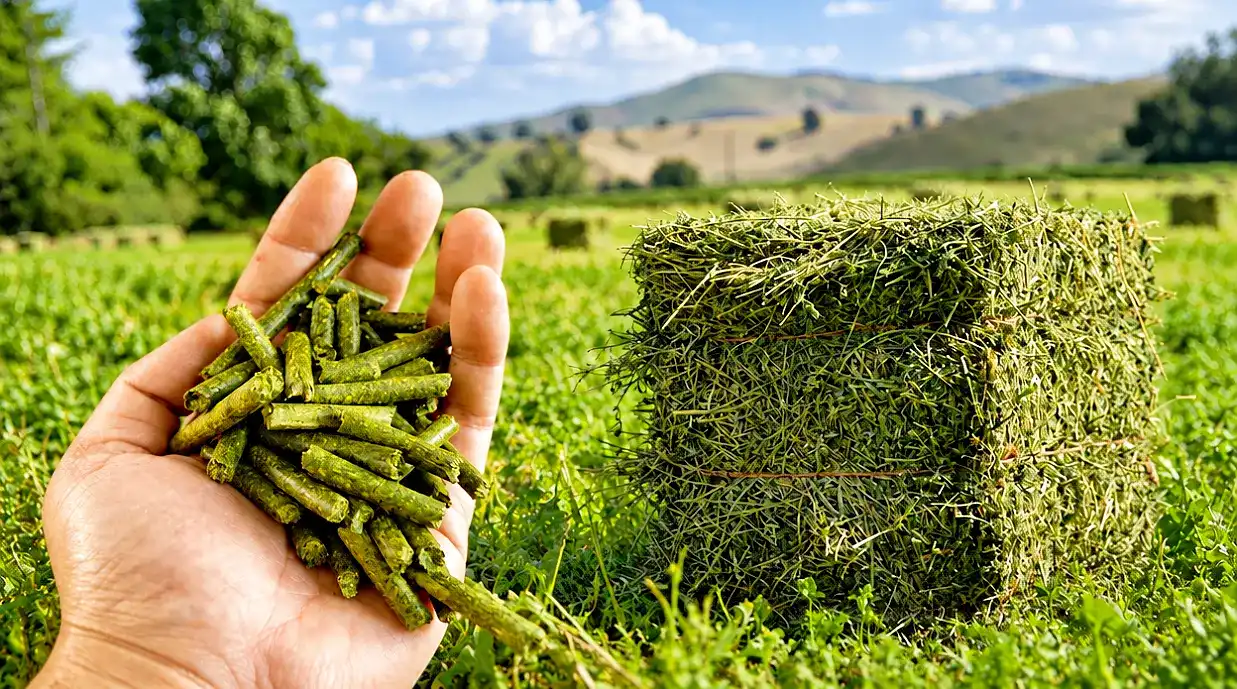
When loose grass is fed directly, waste from selective eating, trampling, and mold commonly totals around 20%. But if you use a grass pellet machine to press loose grass into high-density pellets, the waste rate drops significantly. The same amount of grass can produce more meat and milk, directly reducing your feed cost.
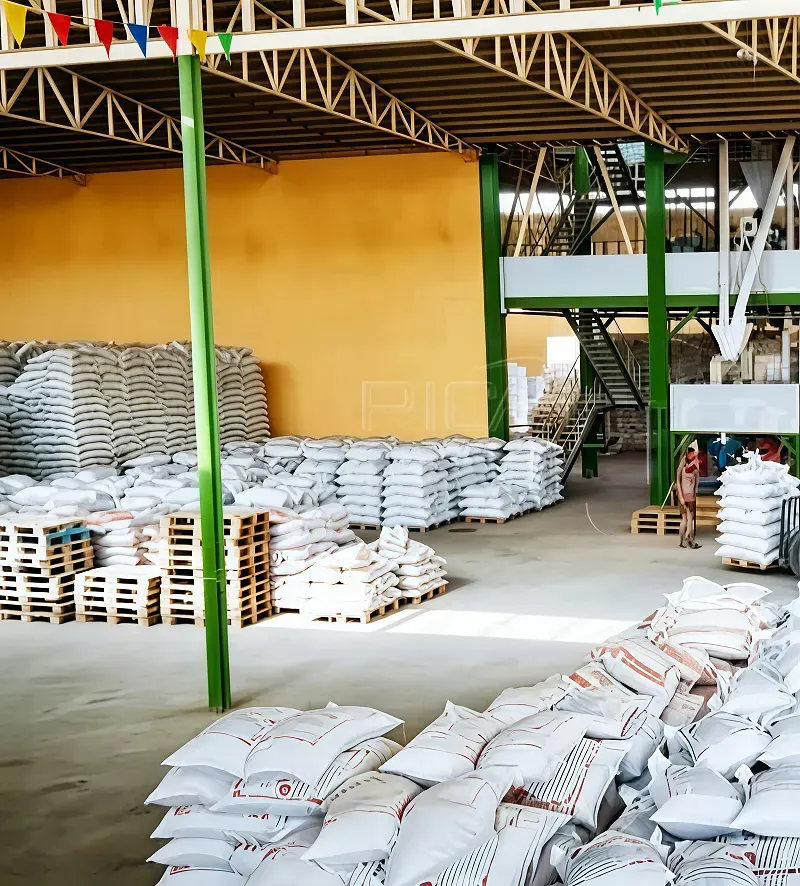
Easier Storage and Transportation
Pellet feed is much denser than loose grass. Instead of finding warehouse space to pile grass as before, you now need less space for the same weight of feed. As long as it is sealed properly, you do not need to worry about mold or spoilage.
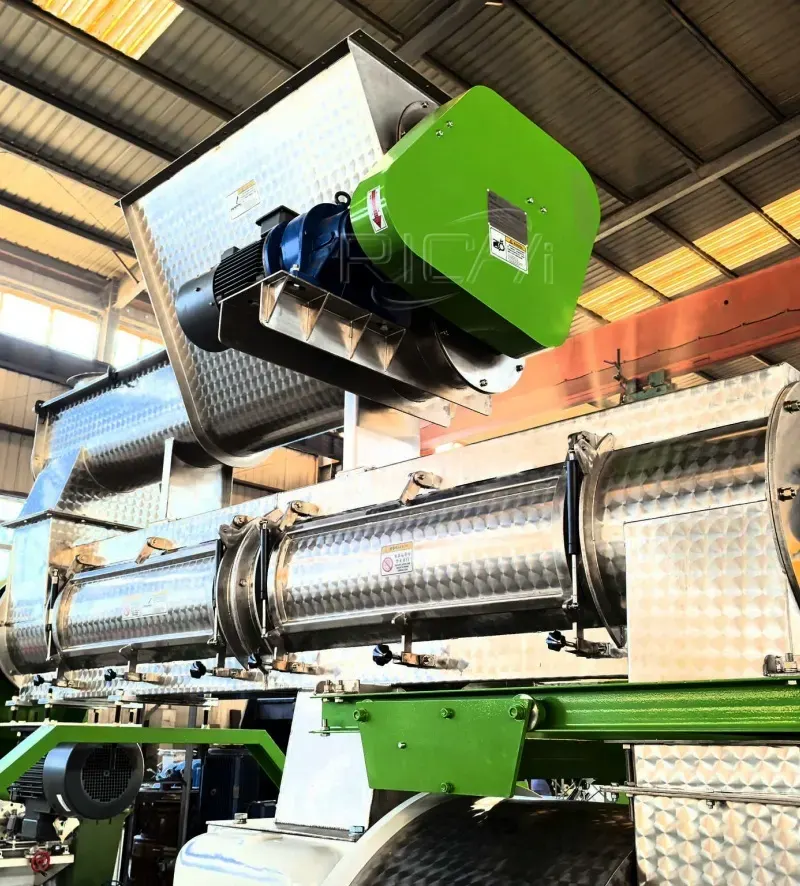
Higher Output and Less Worry
Grass has low bulk density and poor flowability. We optimized the feed inlet, anti-bridging, feeding, and conditioning sections. This reduces the risk of grass pellet machine blockage and improves pelleting efficiency, making operation much easier.
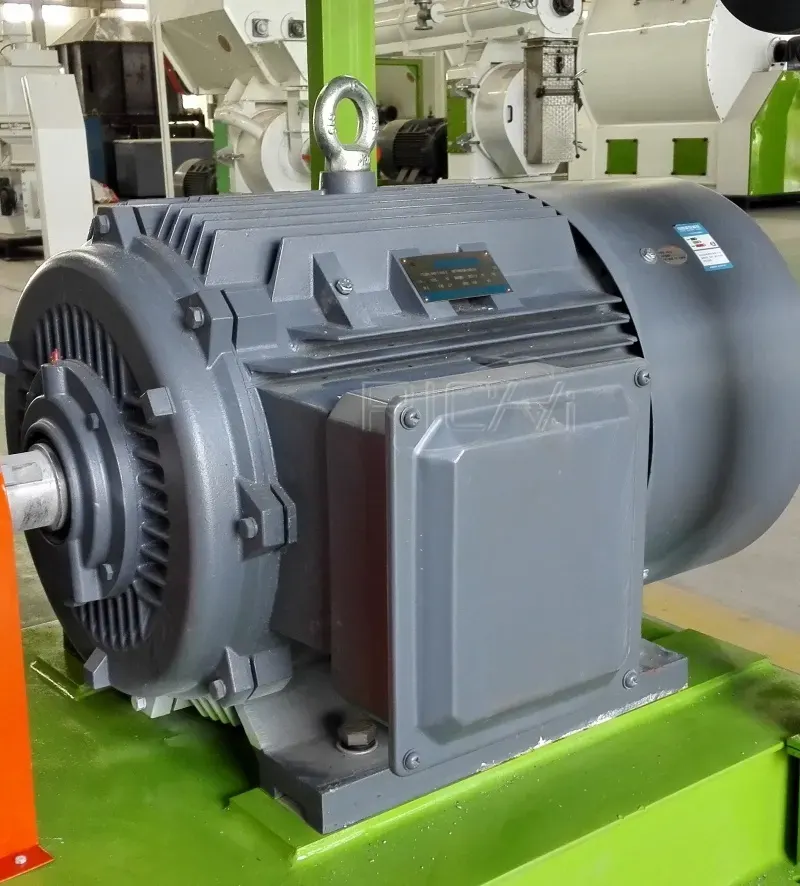
Suitable for Continuous Production
Want 24-hour continuous production? No problem. The excellent gear transmission paired with a high-efficiency Siemens motor not only supports long-term continuous production but also lowers power consumption per unit of capacity. It is very suitable for feed processing plants with commercial large-scale production needs.
Flexible Equipment Utilization
How high is the equipment utilization rate? Switching from 6 mm pellets to 10 mm, from alfalfa to sheepgrass, or from feed pellets to fuel pellets only requires changing the ring die, conditioning parameters, and compression ratio. This allows your factory to take different types of orders flexibly.
Global Users of the RICHI Grass Pellet Machine
From alfalfa to Napier grass, from farms and cooperatives to feed mills, from Southeast Asia to North America, RICHI machines are running steadily in the hands of users in more than 140 countries and regions. Let’s look at the customized solutions we have designed for customers.
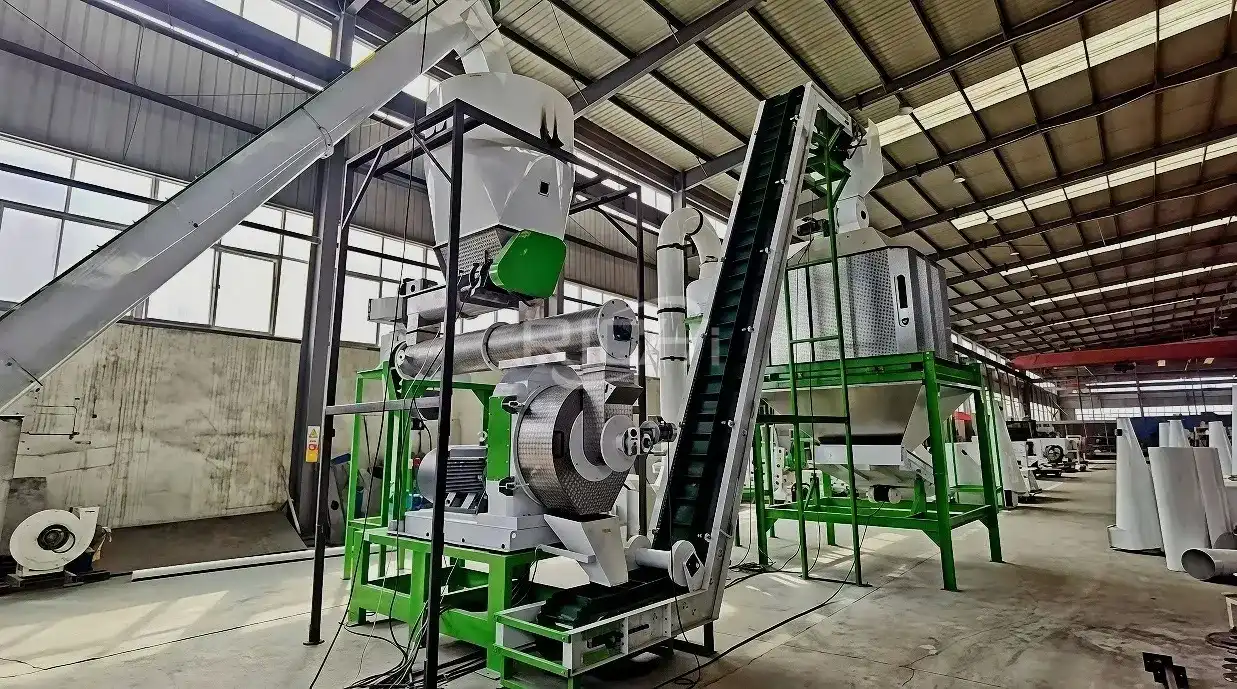
Elephant Grass Pellet Machine Project in Indonesia
Raw Materials :
Elephant grass and straw, with corn, soybean meal, and other additives
Application :
6/8/10/12 mm cattle feed and sheep feed
Configuration :
CZLH420 pellet machine(1.5t/h), heavy-duty ring die, customized compression ratio, low-temperature long-retention conditioner.
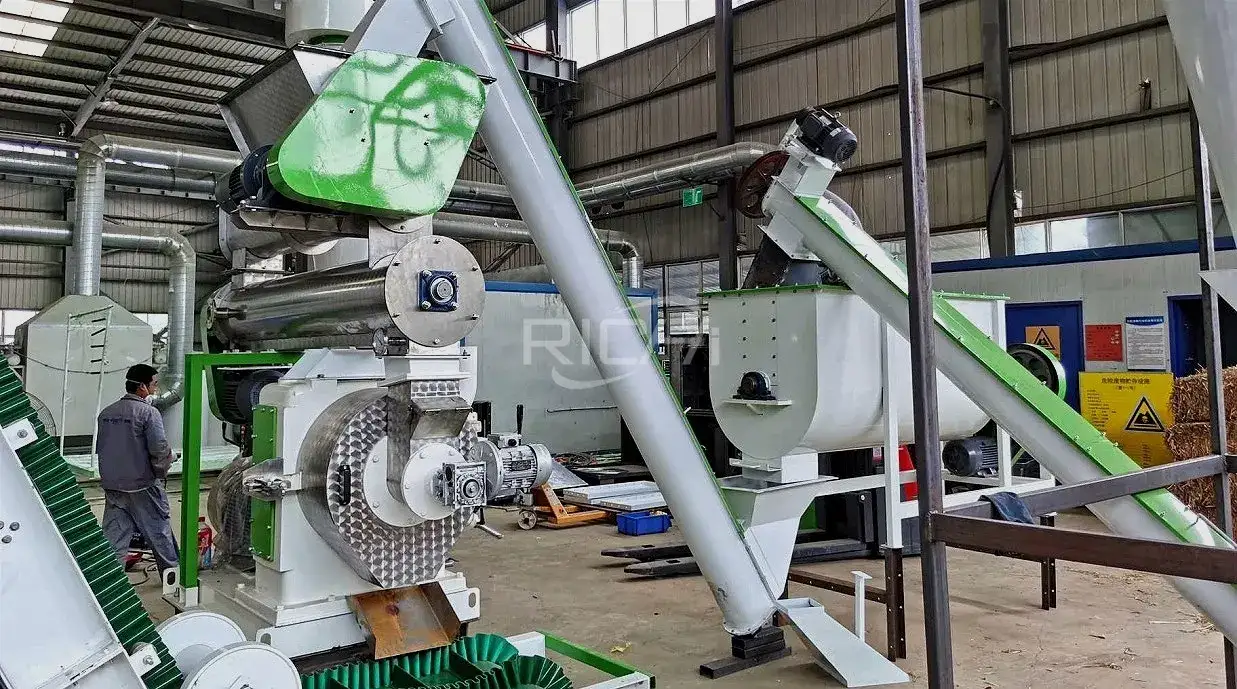
Alfalfa Pellet Machine Project in Argentina
Raw Materials :
100%alfalfa
Application :
mainly for fattening farms, also for pig, sheep, and horse farming
Configuration :
CZLH350, forage crusher, cooler, screener, quantitative packaging scale
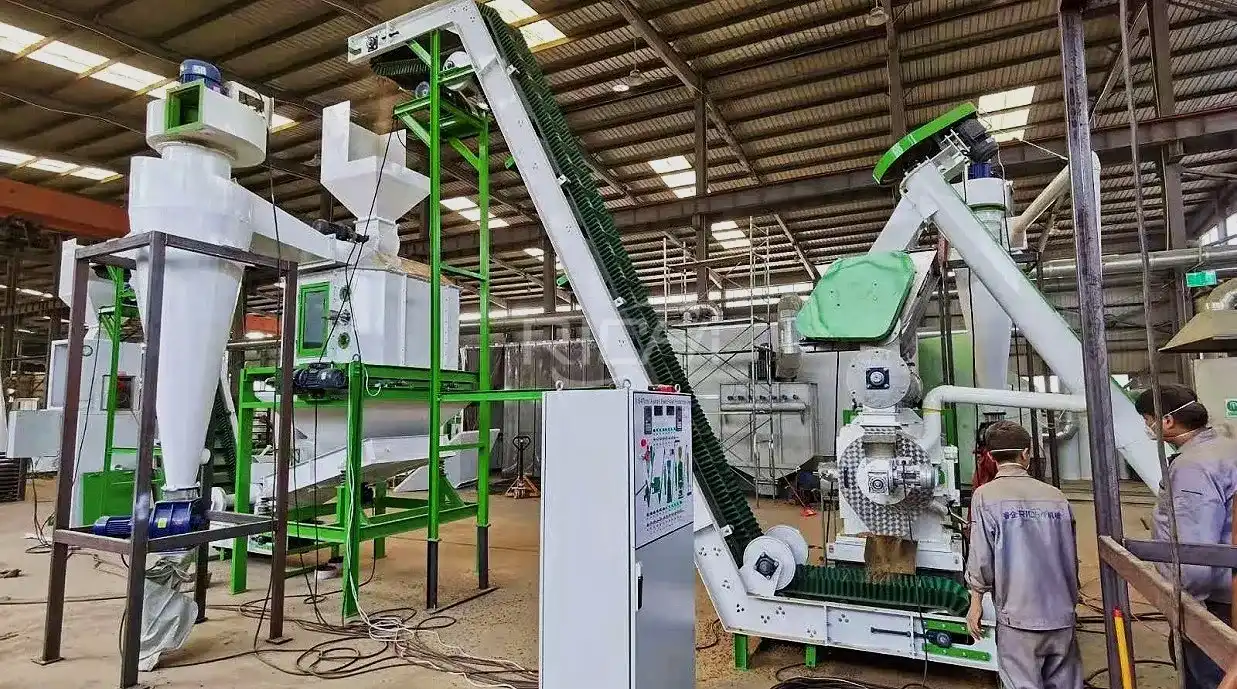
Commercial Grass Pellet Press Solution in the Netherlands
Raw Materials :
alfalfa hay, sugar beet pulp, corn, soybean meal, and wheat bran
Application :
dairy goat pellet feed
Configuration :
CZLH768 pellet machine, gear transmission box, 8P Siemens motor, forced feeder
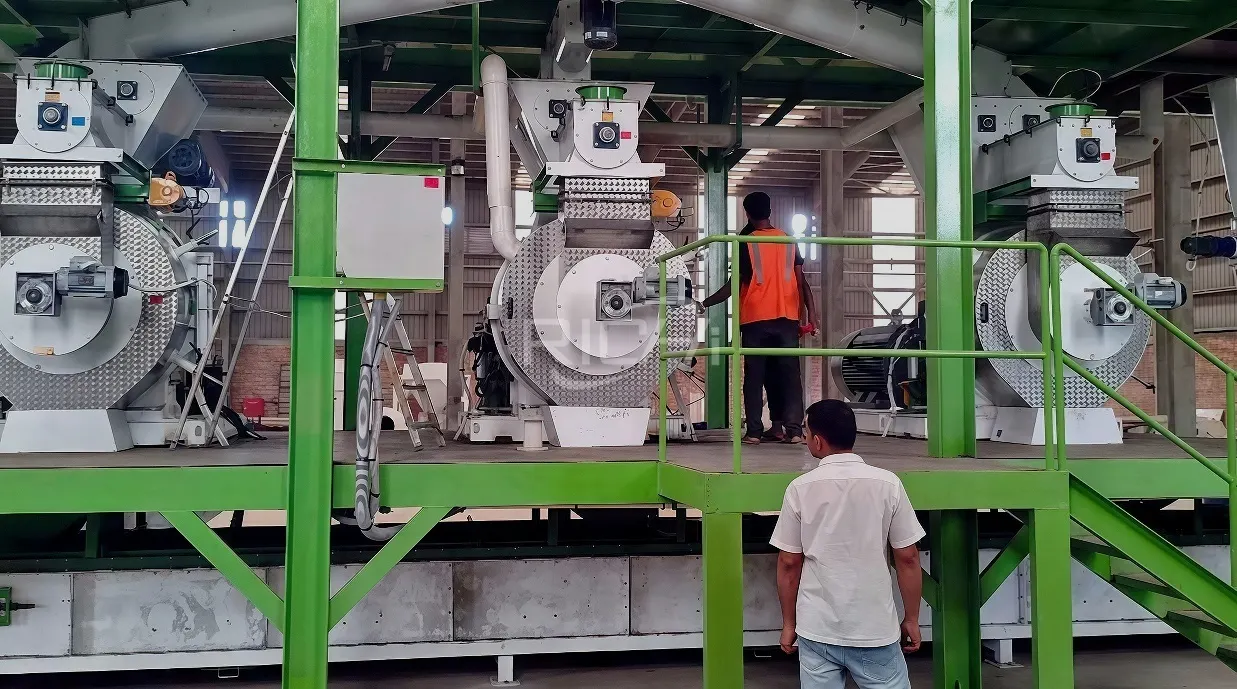
Dry Grass Pellet Machine Project in Mauritania
Raw Materials :
hay, straw, rice husk, corn, soybean meal, etc.; crude fiber accounts for about 50%
Configuration :
CZLH678x3(12t/h), SKLY20*20 impeller counterflow cooler. Finished pellet diameter covers 4–12 mm, meeting the multi-variety needs of cattle, sheep, and camels.
Listening to Real Voices
Whether a machine is good to use is decided by users. The following reviews come from customers we have worked with. They use RICHI grass pellet machines to process grass and have given their most honest feedback.
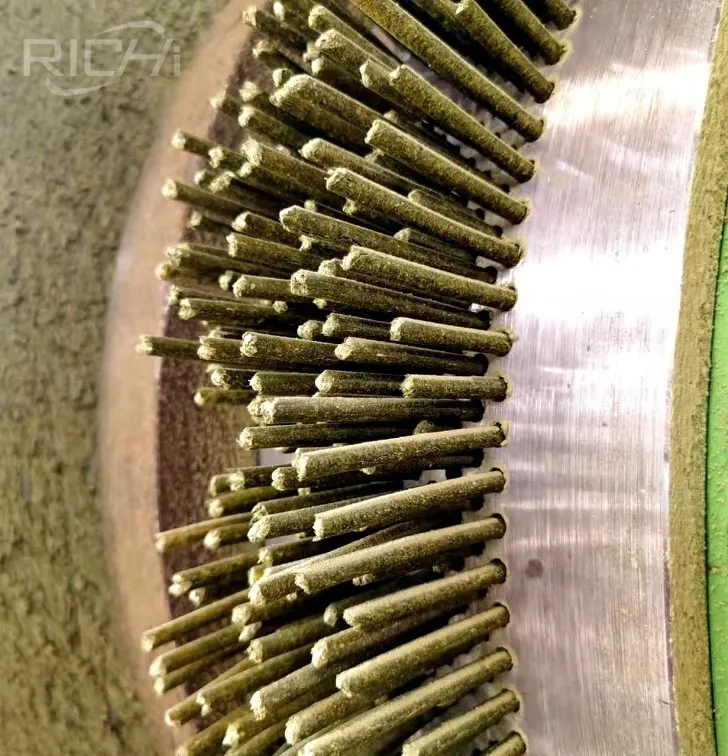
Changing the ring die on the CZLH350 takes only a few minutes. We do not need to stop production for half a day. For our toll processing business, this is very convenient.
Lucas Meyer
Operations Manager at a Feed Toll Processing Plant, Germany
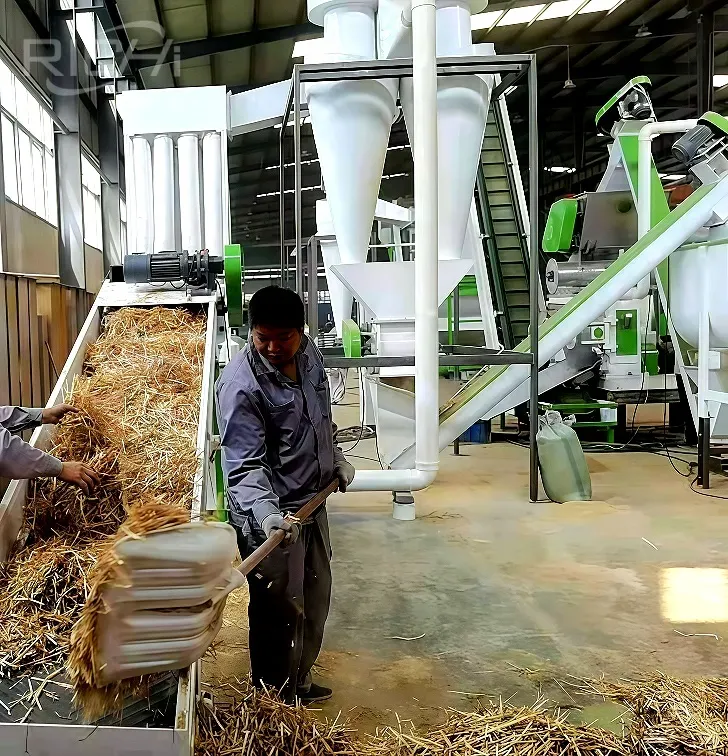
The machine has run continuously for several months without a single die blockage. Feeding is very stable.
Fatima Zahra
Head of Feed Production at a Cooperative, Morocco
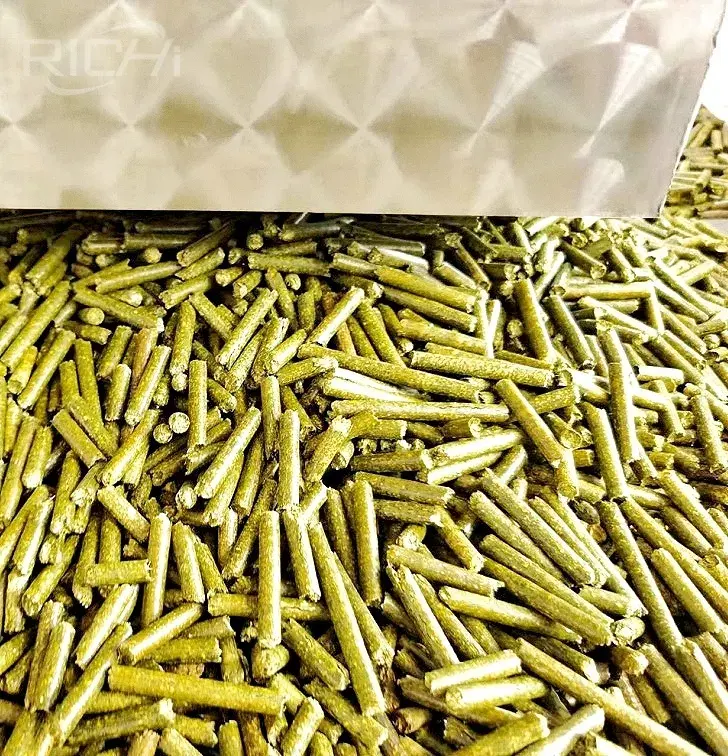
Pellet hardness is very uniform. There is very little breakage when they reach customers, and they look good for sale.
Daniel Okafor
Grass Pellet Processor, Nigeria
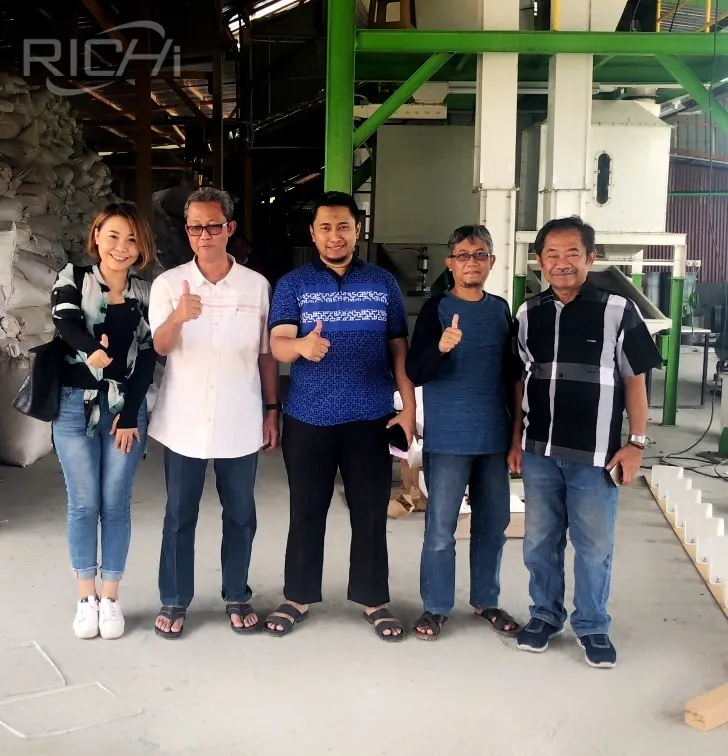
When I have a question, I send a message and the engineer replies quickly. The remote guidance deserves praise.
Elena Petrova
Family Farm Owner, Indonesia

Grass Pellet Machine FAQs
These questions come from real inquiries customers have made when choosing and using a grass pellet mill. We have collected them here to help you understand the key information before making a decision.
I run a small farm with 200 head of cattle. How should I choose a machine?
→
First calculate feed volume. An adult cow consumes about 1.5%–2.5% of its body weight in roughage per day. At 500 kg body weight, that is about 10–15 kg of hay. Two hundred head of cattle need 2–3 tons of forage per day. If you make all pellets yourself, a model with a capacity of 2–3 t/h is recommended.
However, actual selection also depends on your raw materials. Pure grass and mixed forage have different capacities. Pure grass has high fiber content and low bulk density, so the same model has lower capacity. Forage mixed with corn and soybean meal flows better and has higher capacity. You also need to consider whether you produce continuously all day or only run for a few hours each day.
For 200 head of cattle for your own use, the CZLH350 or CZLH420 level is generally sufficient. You can tell us your raw material ratio and planned daily production hours, and RICHI engineers will help you calculate more accurately.
How much is the grass pellet machine price?
→
Small machines (capacity 0.3–4 t/h) cost USD 7,000–20,000. Commercial equipment (above 4 t/h) costs USD 20,000–100,000. The exact price depends on equipment configuration. The exact grass pellet making machine price depends on equipment configuration. The transmission system, ring die material, motor brand, and whether a conditioner is included all affect the final price.
My raw materials are 50% alfalfa and 50% corn and soybean meal, but the finished pellets always break easily. What is causing this?
→
The formula itself is fine. Alfalfa provides fiber, while corn and soybean meal provide energy and protein. Pellets that break easily usually point to the conditioning and cooling stages.
Alfalfa fiber needs to be fully softened to bind with other ingredients. If the conditioning temperature is not high enough or the time is too short, the material only sticks together on the surface and falls apart after cooling.
You can first check whether the conditioning steam is sufficient and whether the conditioning temperature reaches above 80 °C. In addition, for a formula of pure alfalfa plus corn and soybean meal, the compression ratio is recommended to be between 1:8 and 1:10. If it is too low, the pellets will not be dense enough.
If the pellets still break after adjusting these two items, the moisture may be dropping too quickly during cooling, and you need to adjust the air volume of the cooler.
Do you have your own factory? What qualifications do you have?
→
Yes, we have our own factory in Henan, China. RICHI was founded in 1995, and the factory covers 60,000 m². You can visit the About RICHI page for more information.
Many customers have also flown here to inspect our factory before starting cooperation. If you are interested, welcome to contact us and visit our factory.
In terms of qualifications, we hold multiple international certifications, including ISO 9001 quality management system certification, European CE certification, Swiss SGS certification, and German TÜV certification. Our products are exported to more than 140 countries and regions. These certifications and export records ensure that every machine leaving the factory meets international standards.
Do you provide installation and commissioning services?
→
Of course. After the grass pellet machine is shipped, we will arrange engineers to guide installation and commissioning on site, and we can also provide remote video guidance. Commissioning includes adjusting the ring die and roller clearance, setting conditioning parameters, and trial operation to ensure your operators can work independently.
How long do the ring die and rollers last? What is the warranty period?
→
With proper maintenance, the ring die and rollers can normally last around 1,000 hours. Actual service life depends on the abrasiveness of the raw material. Coarse, hard materials such as Napier grass and straw accelerate wear, while alfalfa and ryegrass are relatively gentle. The whole machine has a one-year warranty, and the core components, the ring die and rollers, have a 6-month warranty. If you need replacements, the quick-release clamp-type ring die structure can keep replacement time within half an hour.

