
hemp pellet machine
Hemp is tough to pelletize. The fiber tangles, the material bulks up, and standard machines clog. These are common problems when processing high-fiber hemp materials.
RICHI hemp pellet machines are designed for these conditions, with capacities from 1–40 t/h. They can process hemp stems, leaves, seeds, and meal for animal feed, bedding, or biomass fuel pellets. Our equipment has been supplied to customers in more than 140 countries and regions.

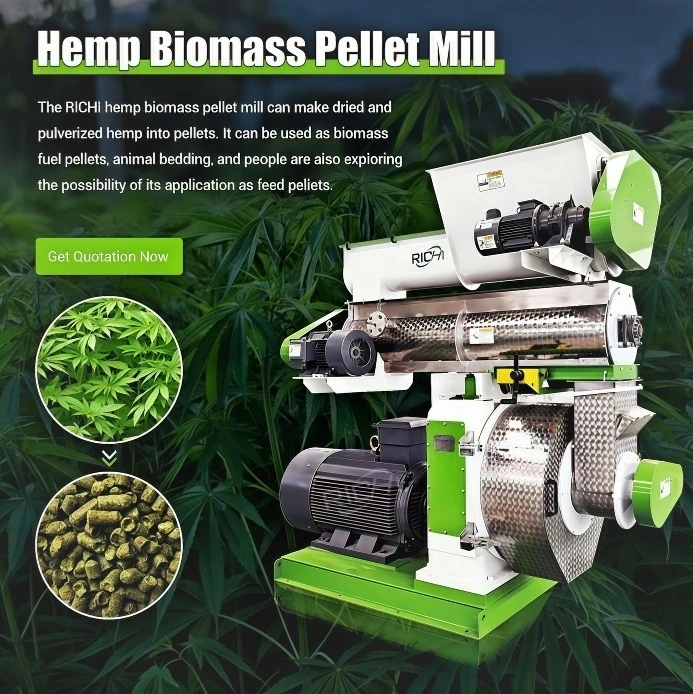
Hemp Pellet Machine Overview
This is a ring die pellet machine. It handles hemp stems, leaves, straw, seeds, and meal. Switch the formula and configuration, and the same machine makes animal feed, bedding, or biomass fuel pellets.
Hemp fiber tangles easily, so we built the machine around that problem. Most buyers are hemp processors, feed plants adding hemp to an existing formula, or bedding and biomass fuel producers.
Making hemp fuel pellets instead? Take a look at our biomass pellet machine. On this page, we stick to hemp feed pellets — raw materials, equipment setup, production lines, and what our customers actually run.
We supply both single hemp pellet machines and complete turnkey production lines. Contact us for more information.
Capacity: 0.2-4 T/H
Power: 22-250 kW
Hemp Pellet Machine Structure and Key Design Features
When choosing a hemp pellet mill for sale, buyers need more than just a suitable model. RICHI optimizes the machine across feeding, conditioning, forming, pressing, transmission, and support to handle different hemp materials and support continuous production.
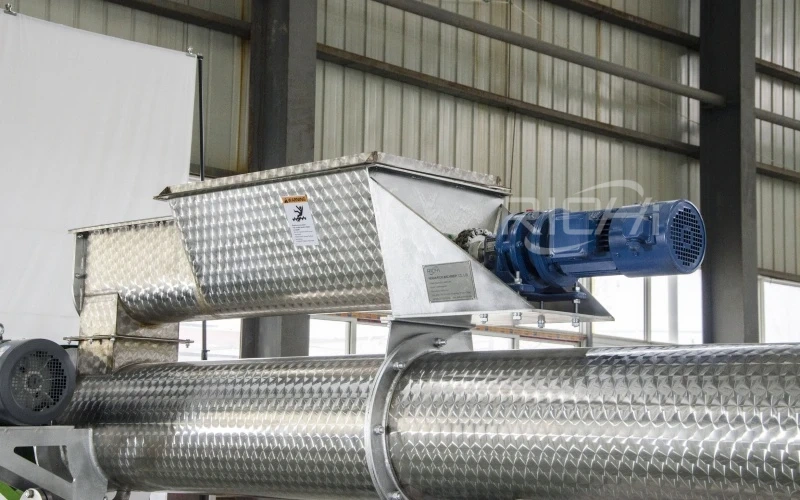
Stable Feeding System
Hemp stems, leaves, and straw become bulky after crushing. Feed them straight into the pellet machine, and you get bridging and tangling. Our machine uses a bridge-breaking device plus a forced feeder with variable-frequency speed control. Hemp material enters the pelletizing chamber evenly and steadily.
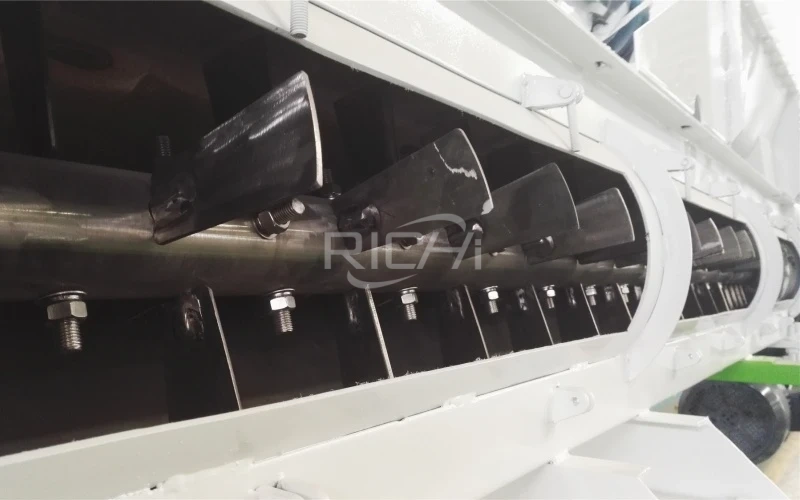
Deep Conditioning System
An extended, enlarged conditioner gives hemp material more room to mix and condition. Depending on your feed type, we can configure 1-3 conditioner layers. This extends contact time between material and steam, helping high-fiber material soften fully.
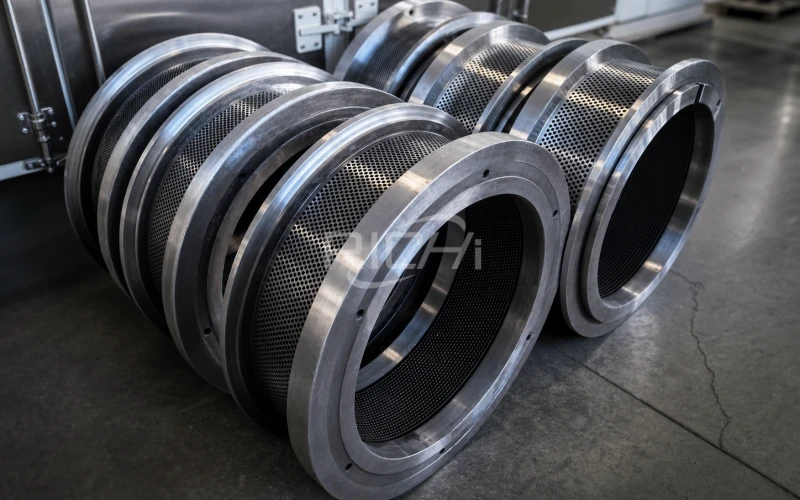
Reinforced Forming System
Carburized alloy wear-resistant ring dies and hard-faced wear-resistant rollers handle the abrasion hemp material causes during pelletizing. Service life runs 2-3 times longer than standard carbon steel ring dies on the market.
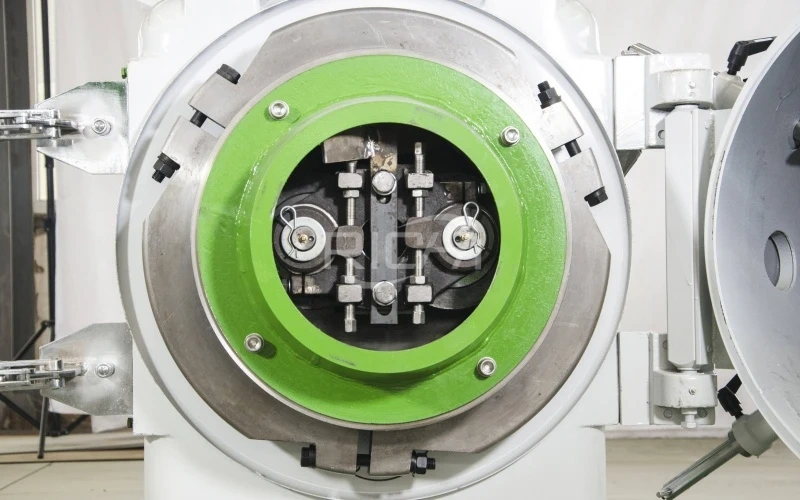
Precision Pressing System
Hemp seeds, hemp meal, hemp stems, leaves, straw — material condition varies widely. That’s why we offer ring die specs with compression ratios from 1:5 to 1:10. Changing a die on the hemp pellet machine takes only half an hour.
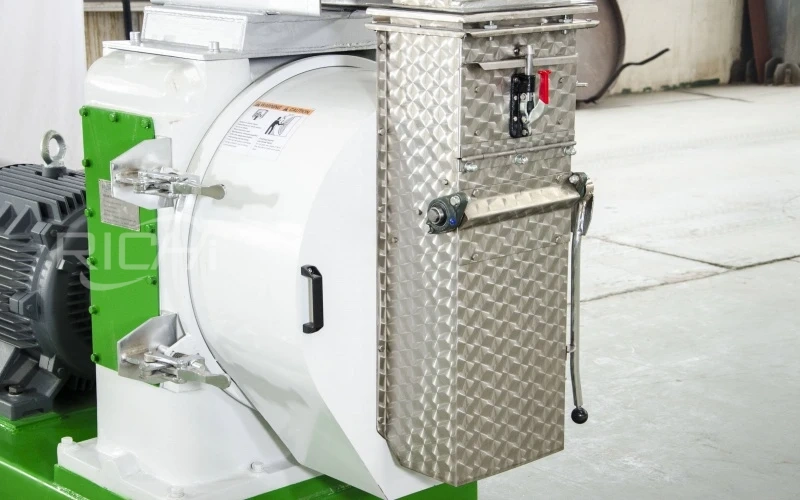
Heavy-Duty Transmission System
High-torque gear transmission runs more smoothly than traditional belt drive, with about 15% higher transmission efficiency. For continuous pressing of high-fiber hemp material, stable power delivery helps reduce the impact of load changes on pelletizing.
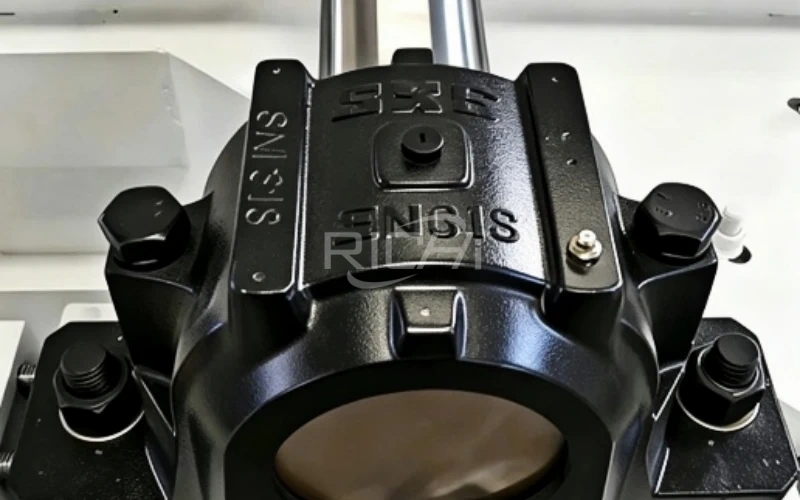
Reliable Support System
SKF bearings provide critical support for continuous operation, keeping core rotating parts stable over the long term. Automatic lubrication, imported oil seals, and safety interlock devices help reduce bearing wear, insufficient lubrication, and operating risks during long runs.
How to Make Hemp Pellets?
Making hemp pellets starts with properly prepared raw materials. Once the material enters the hemp pellet machine, it goes through feeding, conditioning, pressing, and cutting before the finished pellets leave the outlet.
PREV
NEXT


Hemp Pellet Machine Parameters
Different hemp material types, output requirements, or pellet specs call for different hemp pellet making machine models and configurations. Below are several proven RICHI models for hemp pellet production at different scales.

| Model | Production Output (t/h) | Main motor power (kW) | Ring die diameter (mm) | Finished Pellets Diameter (mm) |
|---|---|---|---|---|
| MZLH320 | 0.2-0.3 | 22 | 320 | 4-12 |
| MZLH350 | 0.3-0.5 | 37 | 350 | 4-12 |
| MZLH420 | 1.0-1.2 | 90 | 420 | 4-12 |
| MZLH520 | 1.5-2.0 | 132 | 520 | 4-12 |
| MZLH678 | 2.5-3.0 | 200 | 673 | 4-12 |
| MZLH768 | 3.0-4.0 | 250 | 762 | 4-12 |
Note: The parameters of the hemp pellet machine are reference values under standard equipment configuration. Please contact Ruiqi engineers for the latest data.
What Can You Make with a Hemp Pellet Machine?
This machine handles hemp material and some hemp processing by-products. By adjusting ring die compression ratio and equipment configuration, you can produce animal feed pellets, animal bedding, and biomass pellets.
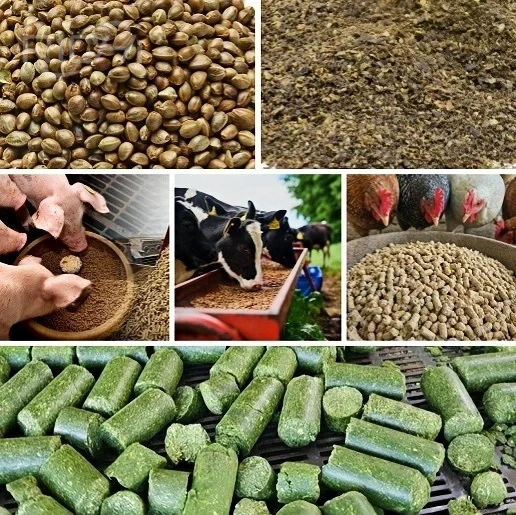
Hemp Feed Pellets
Material: hemp seeds, hemp meal, and feed formula ingredients mixed with corn, soybean meal, wheat bran, rice bran, etc.
Application: pigs, cattle, sheep, poultry, and other livestock and poultry farming.
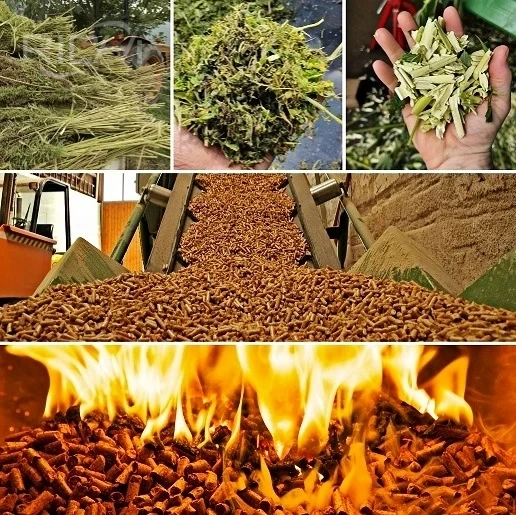
Hemp Biomass Fuel Pellets
Material: hemp stems, straw, leaves, and other fibrous hemp residues suitable for fuel pelletizing.
Application: boilers, industrial heating, and other fuel applications.
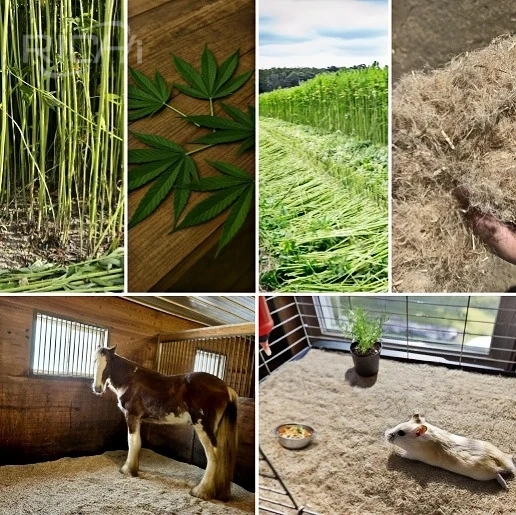
Hemp Bedding Pellets
Material: hemp stems, leaves, straw, and other plant fiber materials suitable for bedding.
Application: bedding for horses, cattle, hamsters, and other animals.
PREV
NEXT
Global Hemp Pellet Machine Cases
Hemp straw, leaves, and fiber waste went largely unused in many places. Now some customers process these materials into pellets. If you’re considering a hemp pellet line, see how our customers did it.
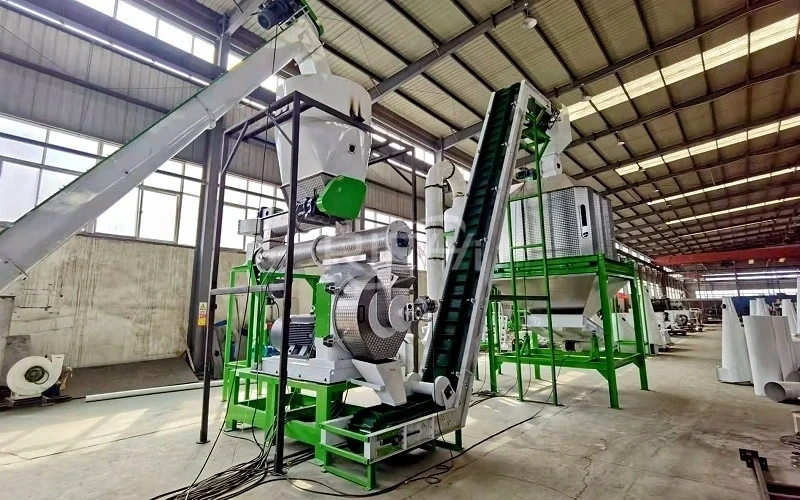
Hemp Pellet Machine Project in Canada
This Canadian processing plant came to us through an existing customer. They added hemp seeds and hemp meal to an existing feed formula, but material particle size and moisture varied between batches. Direct pelletizing kept clogging the machine.
We supplied an MZLH520 ring die pellet machine. Forced feeding and the conditioning system improved feed stability, and we adjusted the ring die compression ratio to match their formula. Today the line mainly produces hemp mixed feed pellets.
Capacity: 3 t/h
Material: hemp seeds, hemp meal, and other feed ingredients
Pellet diameter: 6-8 mm
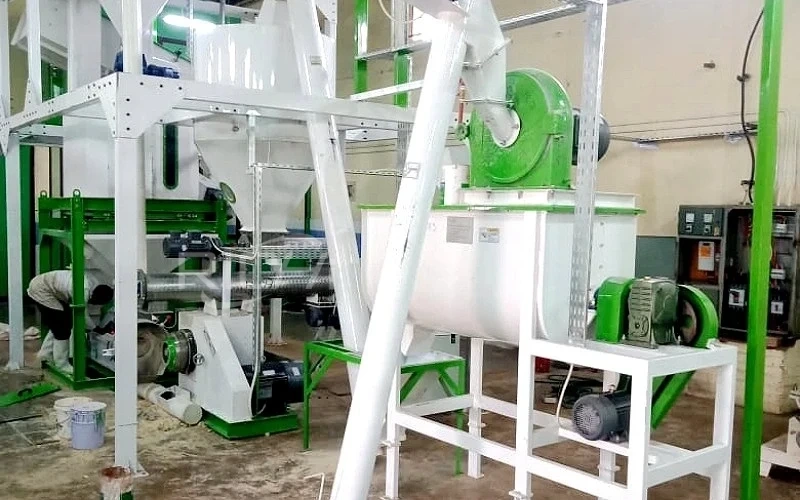
Hemp Pellet Machine Project in Germany
Background: an agricultural service company in Thuringia. They mainly ran conventional feed and wanted to open a new hemp feed pellet line.
Challenge: hemp leaves and inflorescences carry high moisture. Standard feed pellet machines can’t handle them and clog easily.
Solution: an MZLH420 feed pellet machine, plus drying and crushing stages. We adjusted the ring die compression ratio for hemp leaf characteristics.
Result: the customer now runs organic hemp pet feed pellets on this line. Products mainly supply the local organic pet feed market.
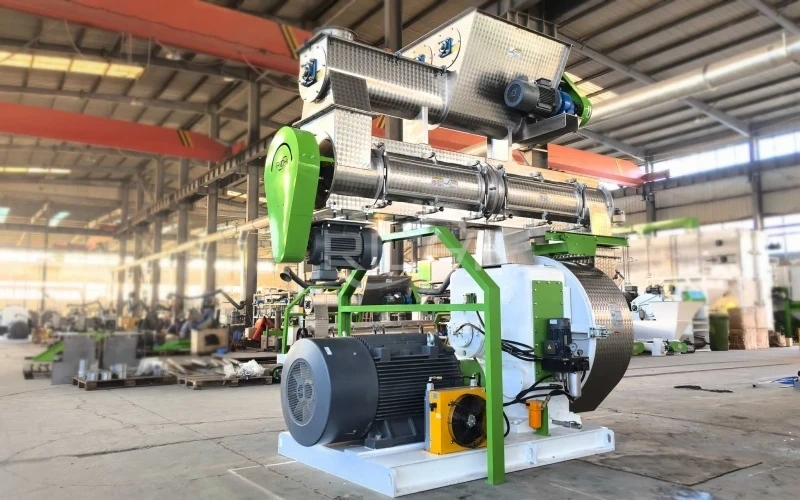
Mobile Hemp Pellet Machine Project in France
A biomass energy cooperative in southern France contacted us. Their problem was specific: raw material sits on different farms, and transport costs eat into profit. They wanted equipment that could process material on site.
We proposed a mobile pellet production line. Crushing, pelletizing, and cooling all sit on one trailer. They now process hemp straw at the field edge, cutting out material transport and lowering overall costs.
Model: MZLH350
Capacity: 0.5 t/h
Application: biomass fuel pellets, on-site field processing
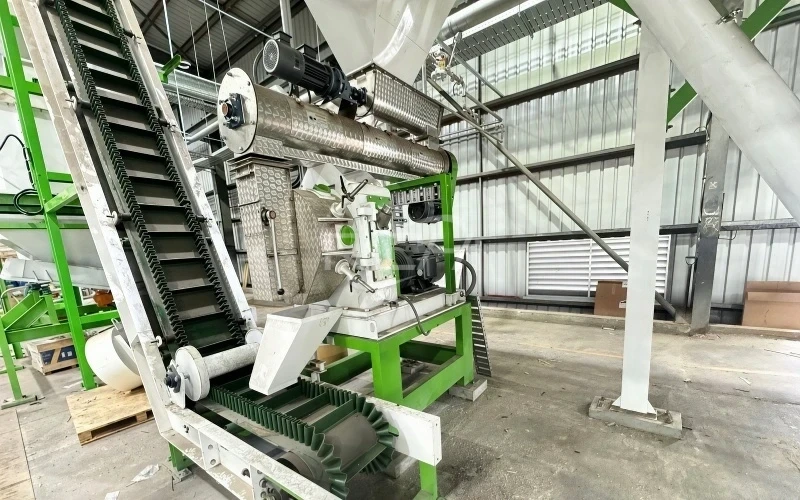
Commercial Hemp Pellet Machine Project in Thailand
A biomass company in northern Thailand used to make pellets from wood chips. After hemp cultivation opened up, local hemp straw had no takers. A year ago they came to us, wanting a machine that could handle coarse fiber and hold up to wear.
We recommended the MZLH420 with a 90 kW main motor. This model is reinforced for the high-fiber characteristics of hemp stalks. It runs steadily, and pellet density meets the customer’s fuel requirements. They’re now evaluating further expansion.
PREV
NEXT
Hemp Pellet Production Line and Process Flow
If you plan to process hemp feed pellets on a large scale, a hemp pellet machine alone won’t be enough. You’ll need front-end and back-end equipment matched to your raw material condition and final product.
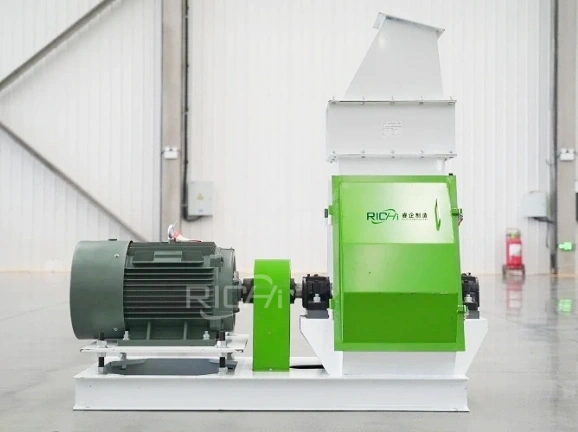
Crushing and Drying
Equipment: Hammer Mill, Drum Dryer
Crush larger hemp stems, leaves, and straw to 3-5 mm. If moisture is still high after crushing, material goes into the dryer and comes down to around 10%-15%.
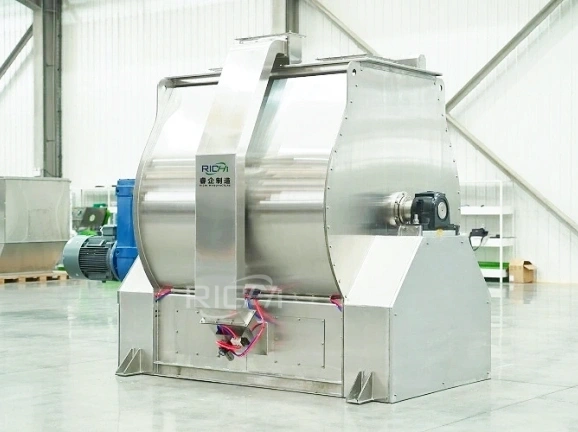
Mixing
Equipment: Feed Mixer
Hemp material goes into the mixer together with corn, soybean meal, wheat bran, rice bran, and other formula ingredients. Thorough mixing supports stable pelletizing and consistent finished product quality.
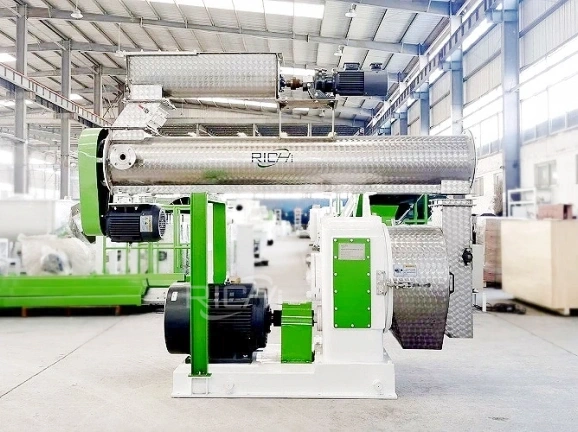
Pelletizing
Equipment: Hemp Pellet Machine
Mixed material enters the hemp pellet machine and goes through conditioning, pressing, and cutting. Out come cylindrical pellets of fairly consistent size. This step is the core of the whole line.
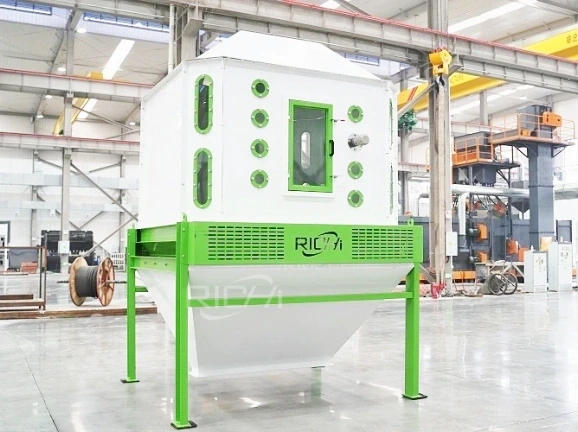
Cooling
Equipment: Counterflow Cooler
Fresh pellets are hot and still carry moisture. Packaging them directly risks mold. A counterflow cooler brings down temperature and moisture, keeping pellet quality stable.
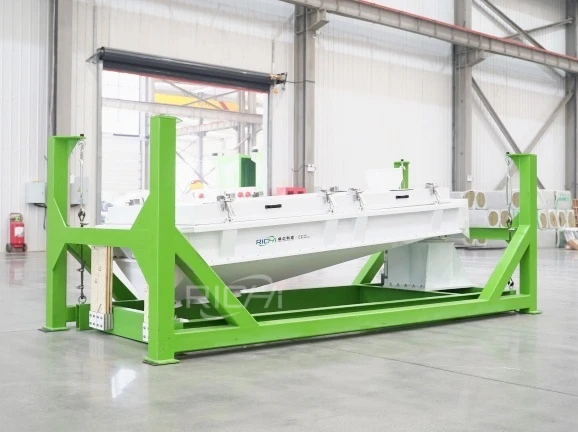
Screening
Equipment: Rotary Screener
The screener removes powder and off-spec pellets produced during processing. Qualified pellets go to packaging. Screened powder can usually return to the pellet machine for re-pelletizing, so nothing goes to waste.
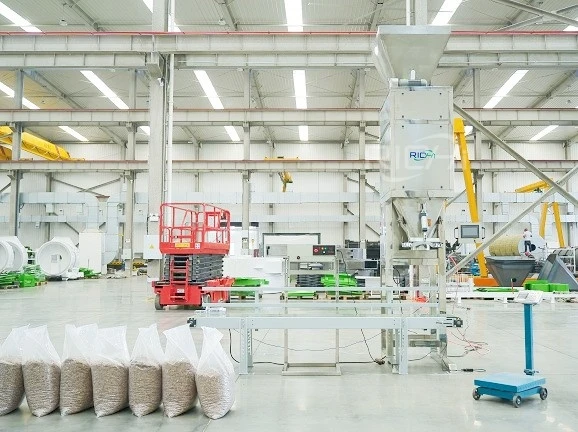
Packaging
Equipment: Automatic Packing Machine
Pellets are weighed and packed to customer requirements, ready for storage, transport, and sale.
Hemp Pellet Machine FAQs
Here are the questions we hear most often when customers buy a hemp biomass pellet machine. They’ll help you understand the real situation before choosing a model or investing.
Hemp fiber tangles machines easily. Can your machine solve this?
→
Yes, we’ve built for it. RICHI hemp pellet machines use a bridge-breaking structure and a forced feeding system. Variable-frequency control adjusts feed speed, so fibrous material enters the pelletizing chamber more evenly. Heavy-duty gear transmission also delivers stable power output, reducing running fluctuations caused by load changes during high-fiber pressing.
The Thailand customer mentioned in our cases worried about long fiber tangling at first too. We adjusted crushing, feeding, and pelletizing parameters to match their material. Based on their feedback, tangling and clogging improved noticeably, and production runs more steadily now.
My material is 40% hemp and 60% grain, and I need 4-5 t/h. Which model should I choose?
→
Based on your ratio and output requirement, we recommend the MZLH520. The capacity data in the parameter table above is a reference value tested with 100% hemp material. However, actual test runs show that when other conditions are similar, a lower share of high-fiber material like hemp usually means higher actual capacity.
In your formula, hemp is only 40%, so the high-fiber share is low. Actual capacity will typically run higher than the nominal value. On the other hand, if you raise the hemp ratio later, capacity will drop accordingly. So the 4-5 t/h figure depends on which formula you use long term. If you’re not sure, send us your material details and let our engineers work it out.
How much does a hemp pelletizer cost? How long until it pays back?
→
For a hemp pellet machine for sale, the price typically ranges from around USD 10,000 to USD 80,000. Payback period can’t be judged from machine price alone. It also depends on material cost, pellet selling price, capacity, daily running hours, labor, and energy costs. Tell us your expected output and local selling price, and we’ll estimate project investment and return for you.
What moisture content should hemp material have before entering the hemp pellet machine? Do I need a dryer?
→
Hemp material moisture should sit at about 10%-15% for best pelletizing. If your material is wetter than that, you’ll need a dryer. Otherwise forming rates drop and pellets crumble easily. If the material already falls in the right moisture range, a separate dryer may not be necessary, which saves you money.
Is the hemp pellet mill hard to operate and maintain? Can ordinary workers learn it?
→
Not hard. Once parameters are set, operators can start and run the machine following standard procedures. RICHI provides operation and daily maintenance training, and ordinary workers usually get the hang of it in a day. The real things to watch are die and roller changes and daily lubrication, and we cover those in training.
What’s the warranty period?
→
RICHI offers a one-year warranty on the whole machine. After the warranty ends, we still provide lifetime technical support. If you run into problems during use, contact us anytime and we’ll help you solve them.

