
poultry feed mill plant
Not sure how to get your poultry feed mill plant project off the ground? RICHI is a well-known poultry feed pellet equipment manufacturer in China. We provide complete equipment solutions for poultry feed machines, poultry feed production plants, and poultry feed production lines.
Our turnkey services cover everything from project design to actual feed production. So far, RICHI has helped more than 2,000 farms and feed businesses worldwide start their pellet production projects.


Poultry Feed Mill Plant Overview
If you are planning to build a poultry feed mill plant, do not rush into choosing equipment first. The more important questions are: What feed do you plan to produce? How much do you need to produce per day? And how should your existing raw materials and formulas match up with the production line?
Chickens, ducks, geese, turkeys, quail, and other poultry do not have exactly the same feed requirements, and common raw materials may include corn, wheat, soybean meal, bran, and premix.
RICHI poultry feed plants work for both small and medium-sized farms producing feed for their own use, and large commercial feed plants. Pellet size(1-12mm) can be adjusted based on the feed formula and the poultry’s growth stage.
Capacity: 1–100 T/H
Price: 10,000+ USD
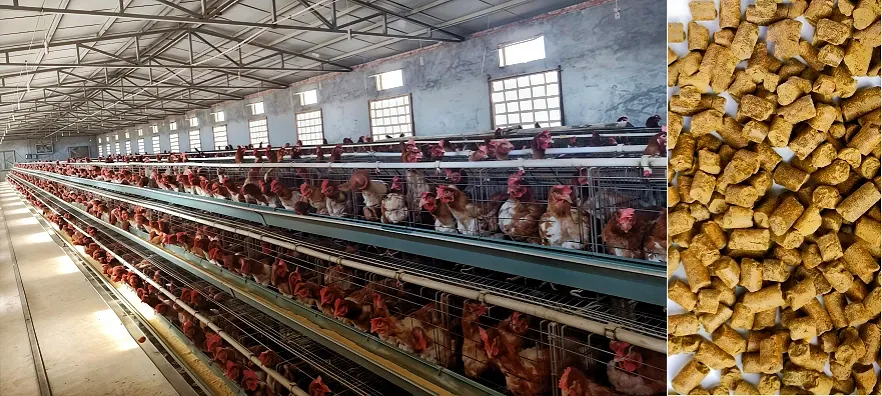
Poultry Feed Mill Plant Videos
The videos below will help you understand the actual configuration, production process, and equipment operation of a poultry feed production line in more detail. If you are considering building a plant, or have not yet decided how to configure the equipment, these videos are a good place to start.
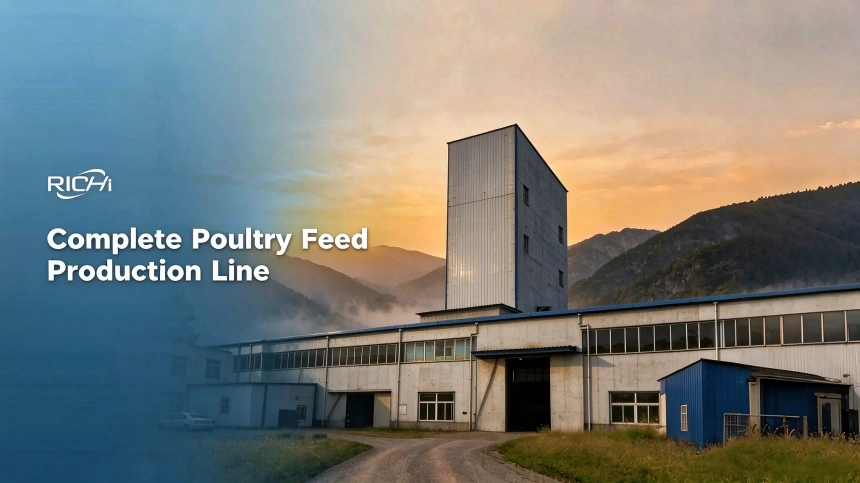

Complete Poultry Feed Production Line
If you want to know exactly what stages a poultry feed mill plant goes through from raw material to finished product, this video will help. From raw material handling to finished product packaging, you can clearly see how the main equipment is connected and how materials are transported between different processes. Looking at the whole line first, then discussing specific equipment, makes the thinking much clearer.
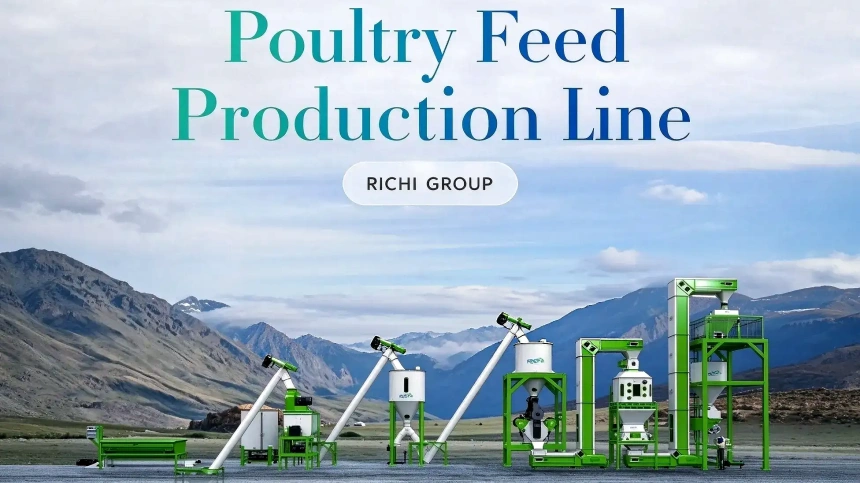
Poultry Feed Pellet Production
If your focus is pellet feed, pay attention to crushing, mixing, conditioning, and pelleting. In the video, you can see raw materials being processed and fed into the pellet machine, then cooled and screened to form finished pellets. After watching, you will have a basic understanding of how pellet feed is actually made.
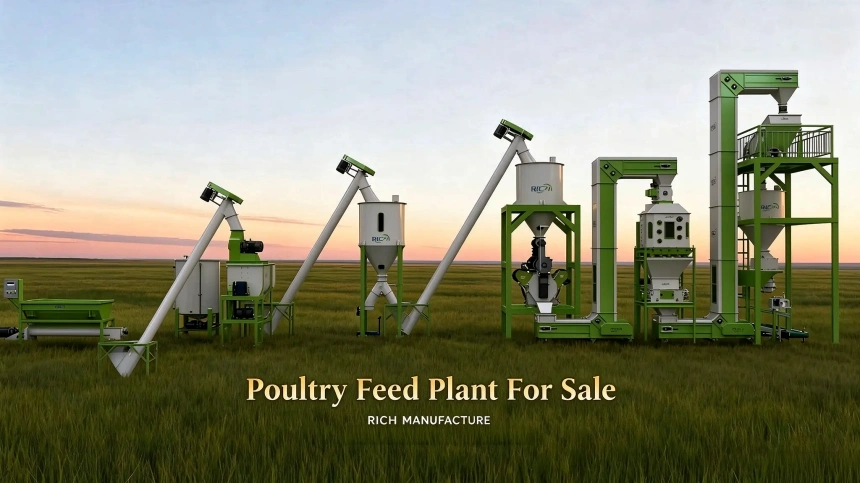
Poultry Feed Mill Plant in Operation
Equipment parameters are one thing, but actual on-site operation is another. This video shows conveying equipment, pelletizing equipment, and other supporting equipment running at the same time. If you want to know what a poultry feed production line looks like after it is actually put into production, this video is closer to the real scenario.
PREV
NEXT
What Can You Produce in a Poultry Feed Mill Plant?
Corn, soybean meal, wheat, bran, fish meal, and premix can all go into the formula to make products in different forms such as pellets and mash. Different raw material combinations and nutritional formulas suit different feed types and poultry.
What Poultry Feed Can You Produce
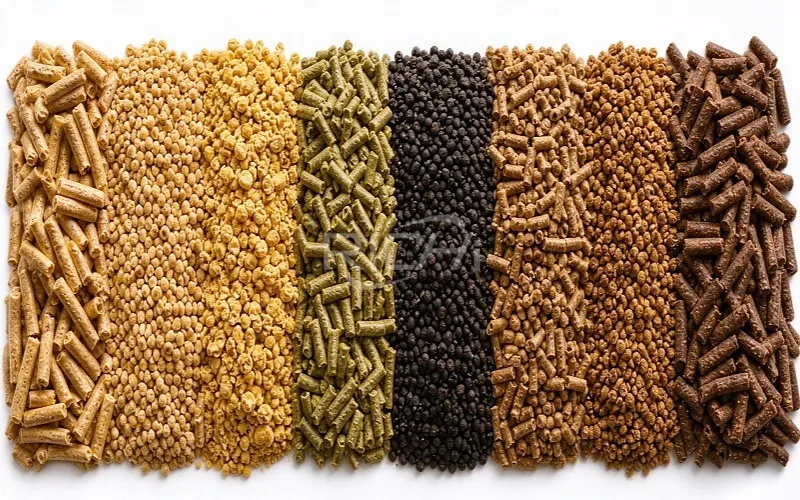
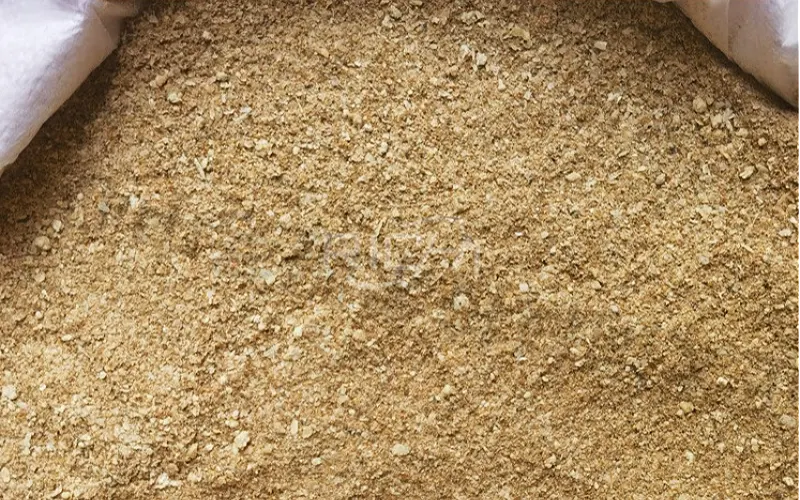
Pellet feed is a common product form in large-scale poultry farming. Raw materials are crushed and mixed, then conditioned and pelletized into 1–12 mm pellets. If you want to reduce production steps, or mainly supply mash feed, you can also use a poultry mash feed plant to complete raw material crushing and mixing.
If you want to produce different types of poultry feed at the same time, you can configure a poultry feed pellet plant and other supporting equipment based on your product requirements, so that the same poultry feed mill plant can handle different formulas and products. This way, when you switch feed varieties, you do not need to build another production system.
In practice, many customers initially only planned to make pellet feed, but later found that there was also a market for mash feed, or they needed to produce both. So it is best to leave room in the equipment configuration in advance. Otherwise, making changes later will be much more troublesome.
Poultry Feed Pellets
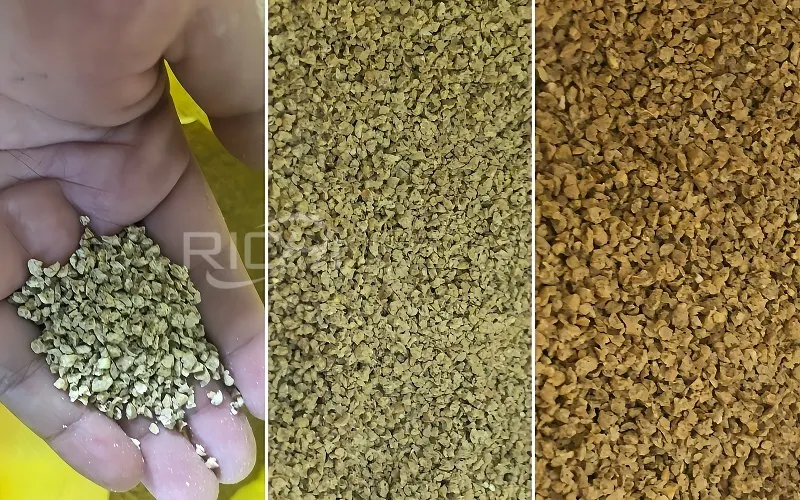
Poultry Crumbled Feed
Poultry Powder Feed
What Poultry Can You Feed
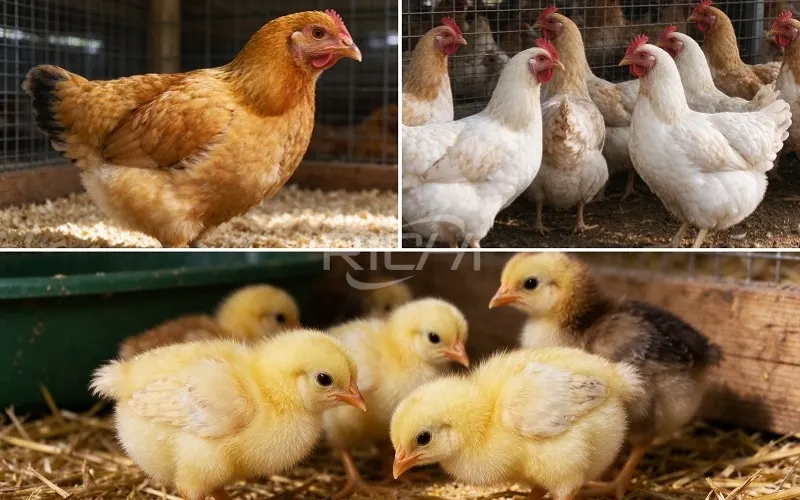
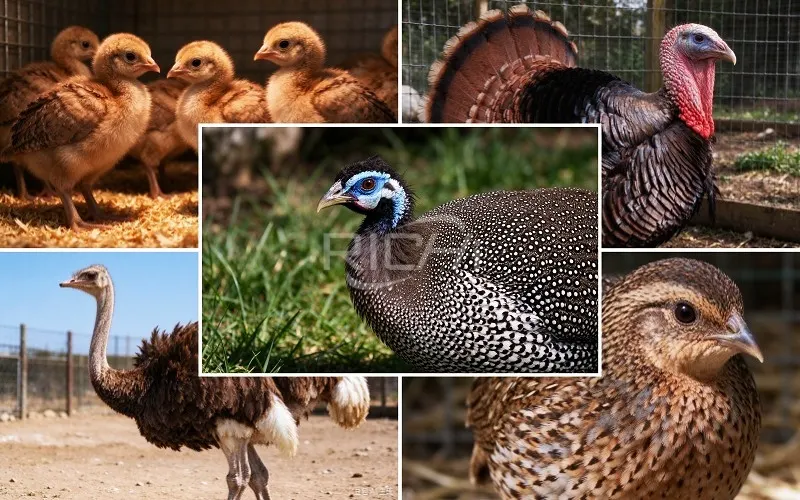
RICHI poultry feed production lines can produce feed for chickens, ducks, geese, turkeys, quail, pigeons, guinea fowl, and other poultry. However, different poultry have different nutritional requirements. For example, layer feed focuses more on nutrients such as calcium and phosphorus, broiler feed focuses more on growth speed and energy, and the formulas and raw material choices for ducks, geese, and other waterfowl are also different.
Because of this, your poultry feed mill plant can be very flexible. The equipment can be configured with 1–12 mm ring dies, making it easy to switch formulas and adjust production parameters such as compression ratio. Some customers make layer feed in the morning and switch to broiler feed in the afternoon. With cleaning, ring die changes, and parameter adjustments in between, the switch takes about half an hour.
Broiler, Layer, Chick
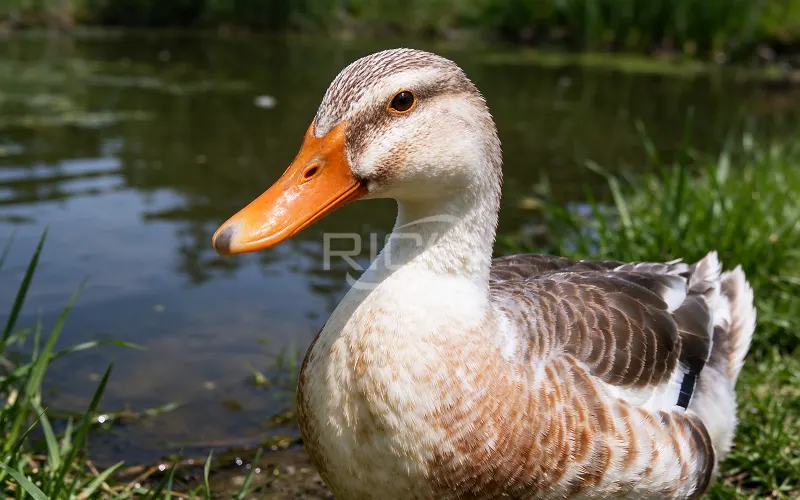
Duck
Goose

Specialty Poultry
Poultry Feed Production Process
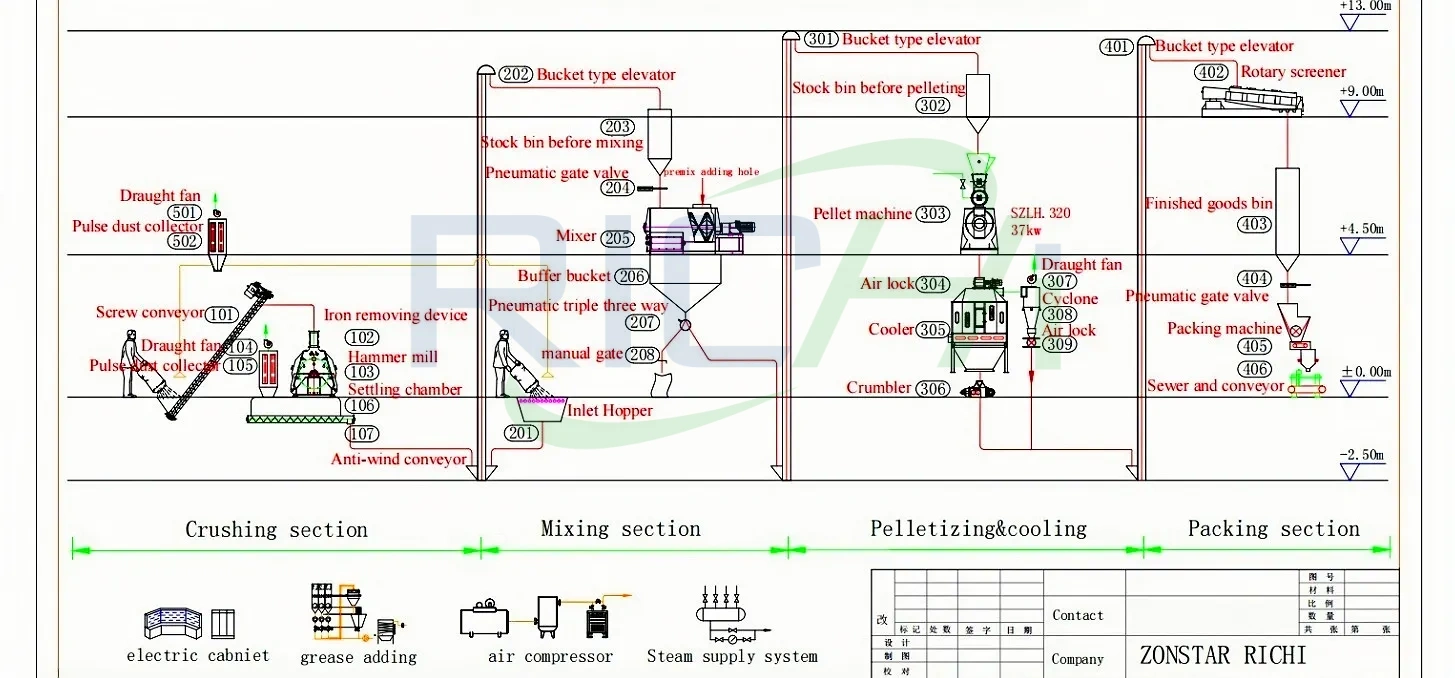
In your poultry feed mill plant, press the start button and see where raw materials are sent, what processing stages they go through, and how they turn from loose raw materials into uniform, smooth poultry feed.
01
Cleaning
Raw materials first enter the powder cleaning sieve, where impurities such as mold, iron nails, and stones are removed. This step protects downstream equipment and also ensures the feed is clean and hygienic.
02
Crushing
Based on the digestive capacity of poultry at different growth stages, raw materials are crushed to a fineness of within 3 mm.
03
Mixing
The mixer thoroughly blends corn, soybean meal, bran, premix, and other materials. If liquid ingredients such as oil need to be added, they can also be added at this stage.
04
Pelletizing
The mixed material enters the conditioner of the poultry feed machine, reaching a state suitable for pelleting, and is then extruded by the rollers and ring die to form continuous feed pellets.
05
Crumbling
If you need smaller pellets for chicks and other young poultry, you can use a feed crumbler to further break finished pellets into smaller sizes.
06
Cooling
The moist, warm finished pellets enter the cooler and exchange heat countercurrently with air, reducing pellet temperature and moisture.
07
Screening
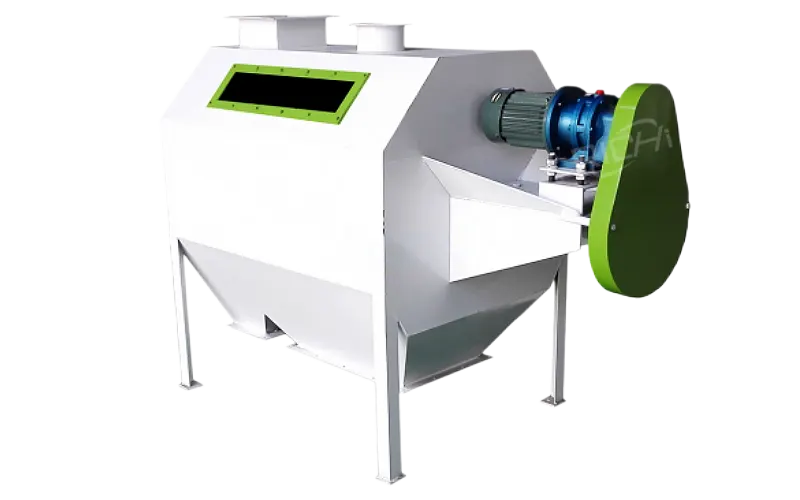
The screener removes substandard pellets and powder, which are sent back to the production line for reprocessing. Qualified products are sent to the packaging stage.
08
Packing
An automatic packing scale is used to weigh, bag, and seal finished pellets. Sealing options include heat sealing, stitching, or a combination of both.
If you are considering building a poultry feed mill plant, or want to know how this production line can match your raw materials and output, welcome to contact us.

Equipment Needed for a Poultry Feed Mill Plant
The configuration of a poultry feed manufacturing plant is not uniform. Small plants generally only need mixing, pelleting, cooling, and screening stages. Large plants, in addition to all the processes mentioned above, also need various conveyors, dust collectors, electrical control cabinets, and other auxiliary equipment.
Poultry Feed Cleaning Machine
Output:15-50 T/H
Power:0.75-1.5 kW
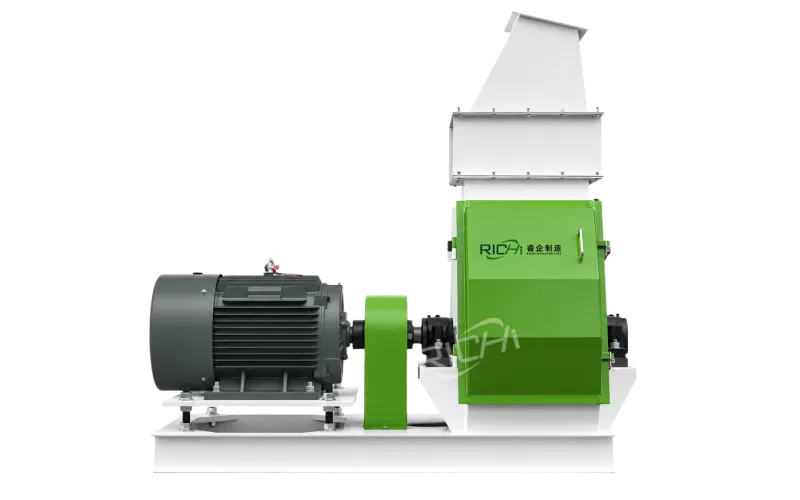
Poultry Feed Crusher Machine
Output:3-50 T/H
Power:37-220 kW
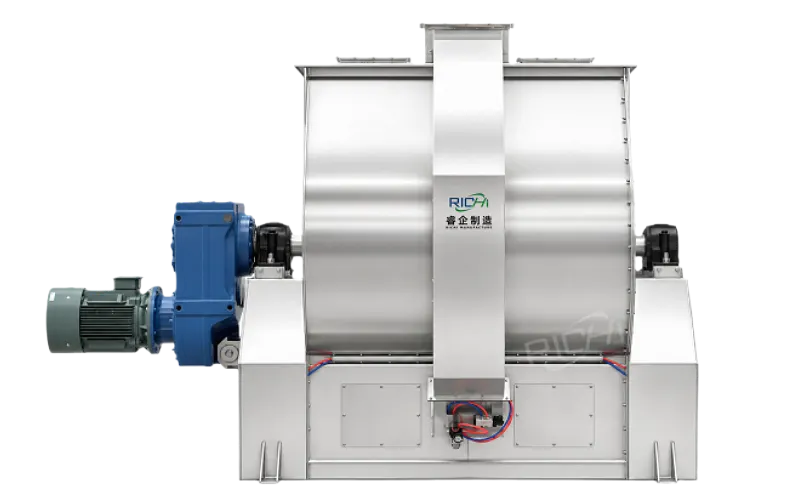
Poultry Feed Mixer Machine
Output:250-2000 KG/P
Power:5.5-30 kW
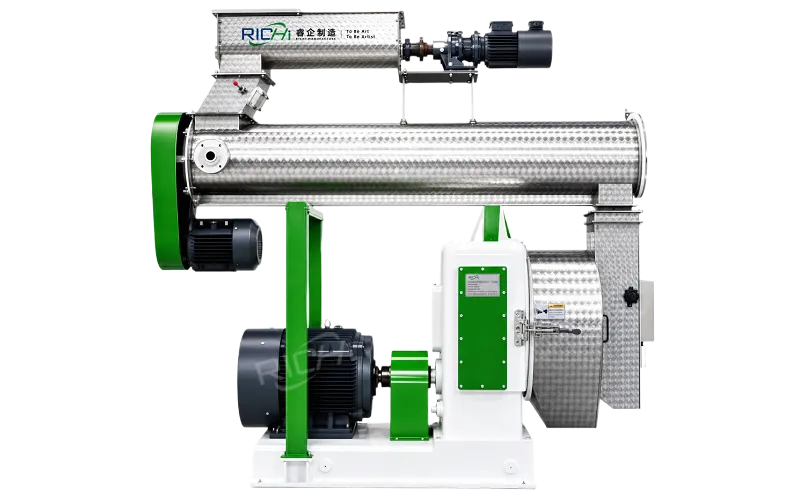
Poultry Feed Pellet Machine
Output:1-40 T/H
Power:22-315 kW
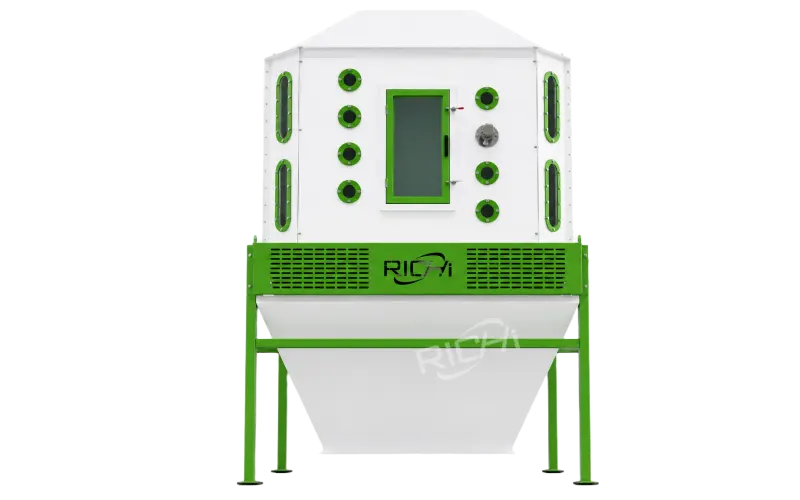
Pellet Cooler
Output:1-40 T/H
Power:1.5-2.2 kW
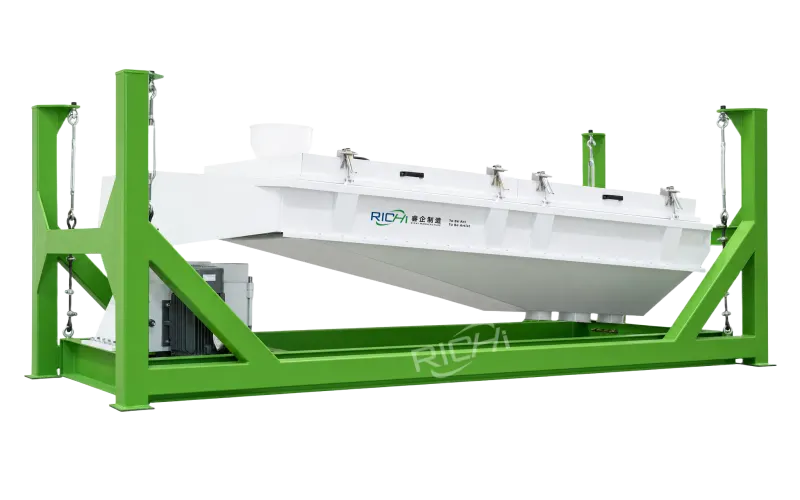
Poultry Feed Screener
Output:3-40 T/H
Power:1.5—5.5 kW
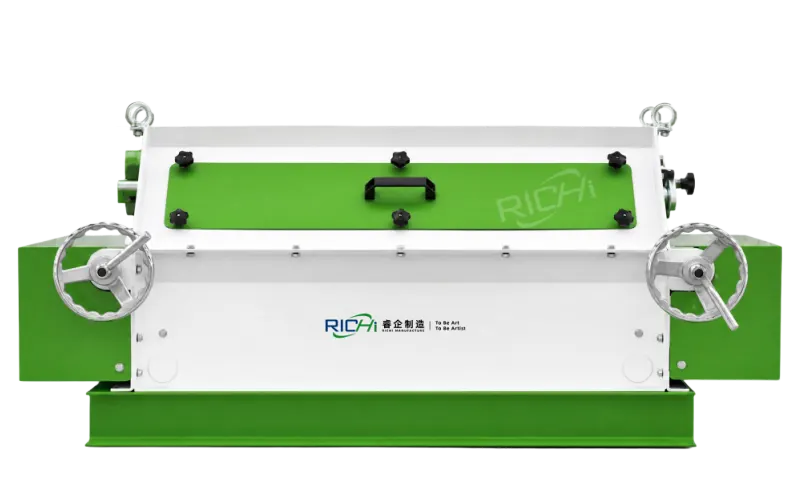
Poultry Feed Crumbler
Pellet Size:0.3-3 mm
Power:4-19.6 kW
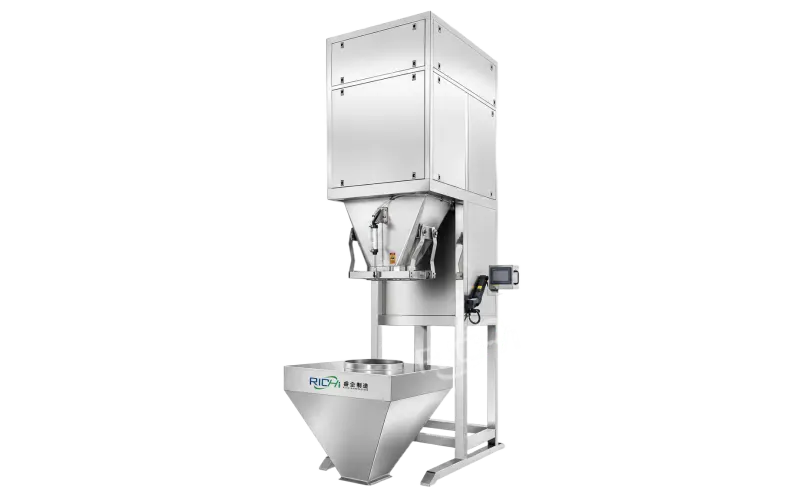
Packing Machine
Output:6–8 bags/min
Power:0.55-2.5 kW

Storage Silos
Capacity:up to 10,000 tons
Volume:222-13382 m³
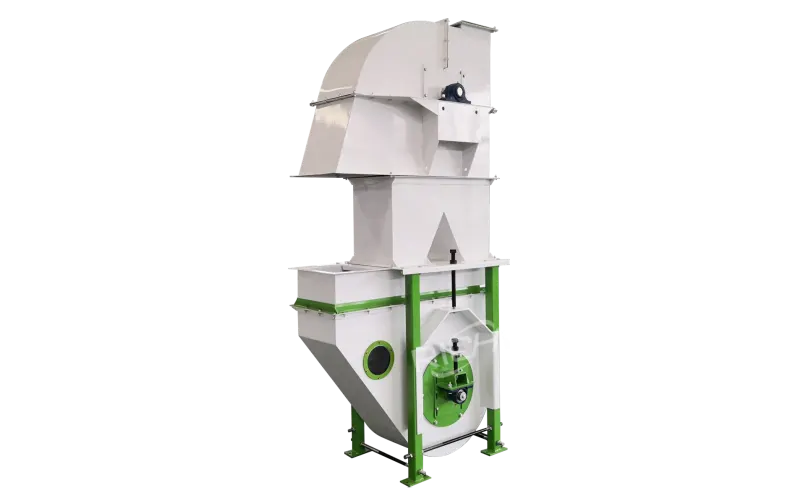
Bucket Elevator
Output:6-100 T/H
Power:≤37 kW
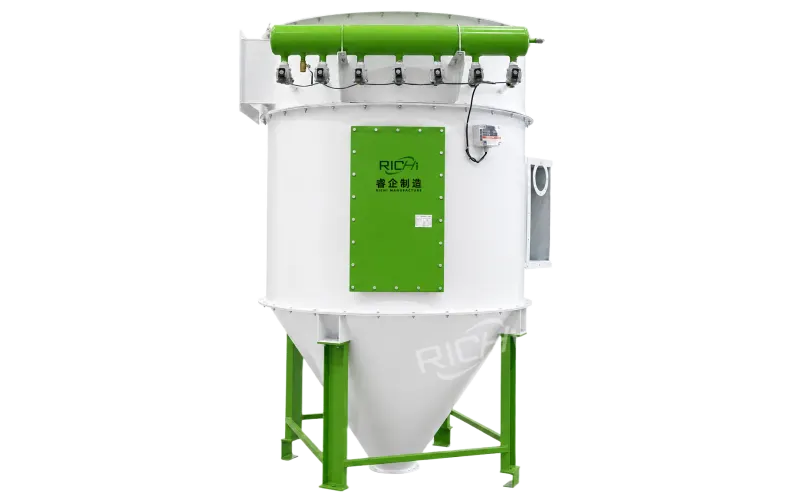
Pulse Dust Collector
filter Bags:4-72
Filter Area:2-36 ㎡
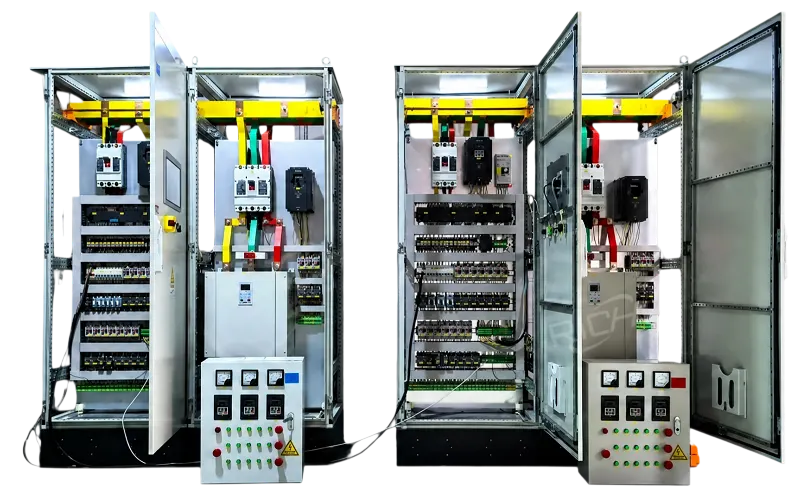
Electrical Control Cabinet
Adaptable Capacity:1-100 T/H
Batching Accuracy:≤+0.1%
What Poultry Feed Mill Plant Capacity Do You Need?
RICHI provides poultry feed processing plant solutions from 1–100 t/h. You don’t need to struggle with which equipment to choose right away. We will provide the most suitable configuration based on your project, so every bit of your investment goes where it matters.
1–2 T/H Small Poultry Feed Mill Plant
3–4 T/H Animal Feed Mill Plant
5–7 T/H Small Commercial Poultry Feed Plant
8–10 T/H Medium Feed Mill Plant
12–20 T/H Commercial Poultry Feed Mill
25–40 T/H Large-Scale Poultry Feed Production Line
50–60 T/H Industrial Poultry Feed Pellet Plant
60–80 T/H Large Industrial Animal Feed Plant
80–100 T/H Ultra-Large Industrial Poultry Feed Mill Plant
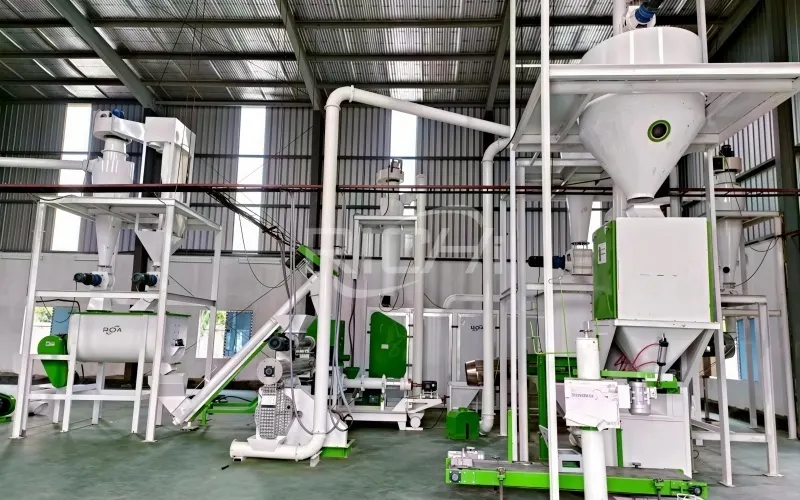
1–2 T/H Small Poultry Feed Mill Plant
- Capacity : 1-2 T/H
- Investment Cost : 10,000-50,000 USD
- Installation Period : 7-15 Days
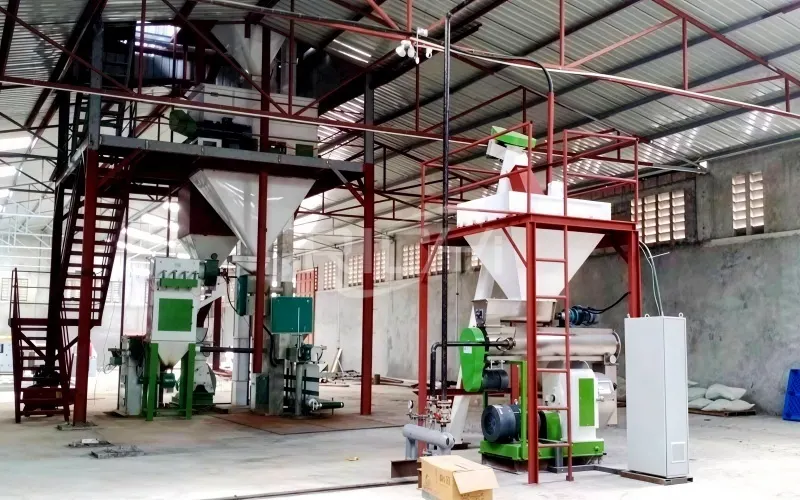
3–4 T/H Animal Feed Mill Plant
- Capacity : 3-4 T/H
- Investment Cost : 50,000-120,000 USD
- Installation Period : 15-20 Days
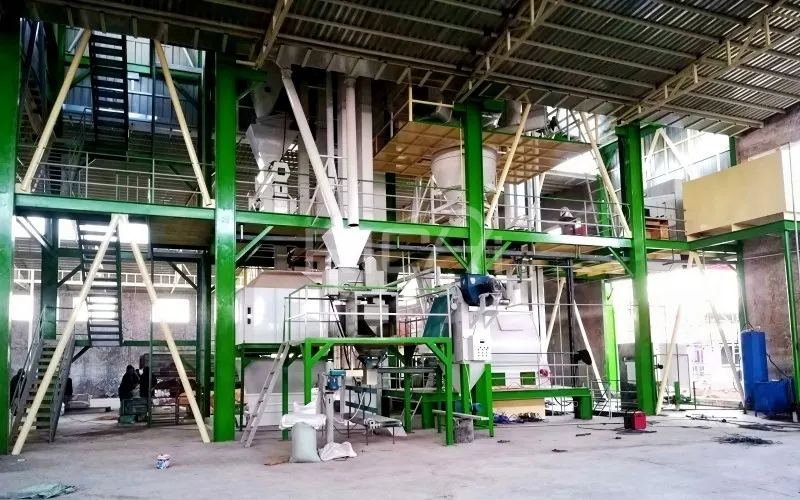
5–7 T/H Small Commercial Poultry Feed Plant
- Capacity : 5-7 T/H
- Investment Cost : 70,000-250,000 USD
- Installation Period : 20-35 Days
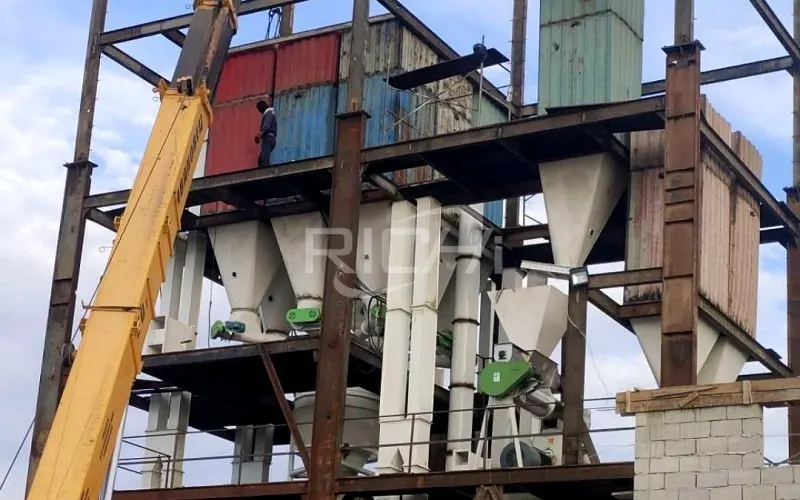
8–10 T/H Medium Feed Mill Plant
- Capacity : 8-10 T/H
- Investment Cost : 150,000-300,000 USD
- Installation Period : 40-55 Days
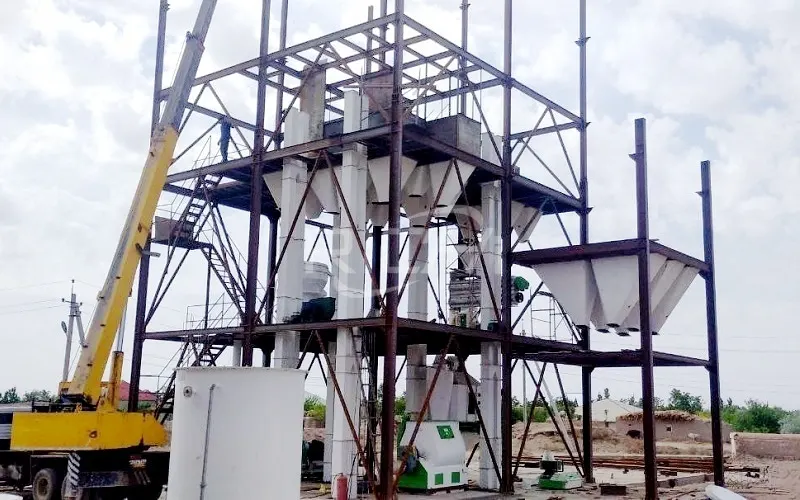
12–20 T/H Commercial Poultry Feed Mill
- Capacity : 12-20 T/H
- Investment Cost : 250,000-580,000 USD
- Installation Period : 60-90 Days
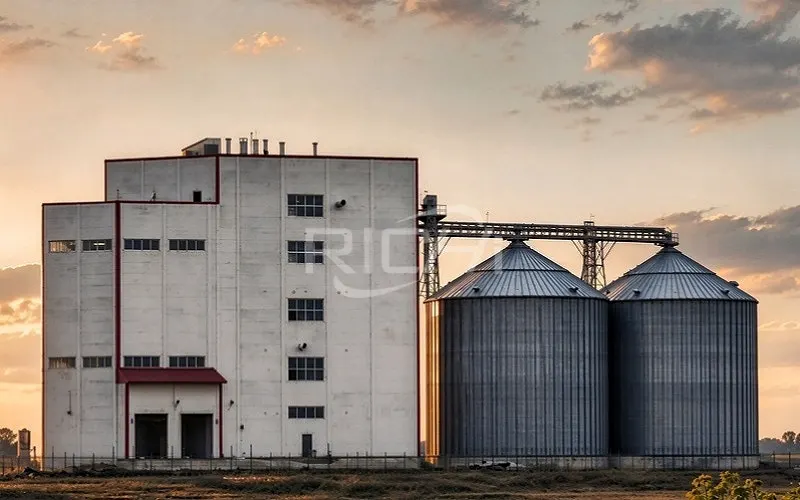
25–40 T/H Large-Scale Poultry Feed Production Line
- Capacity : 25-40 T/H
- Investment Cost : 450,000-850,000 USD
- Installation Period : 85-120 Days
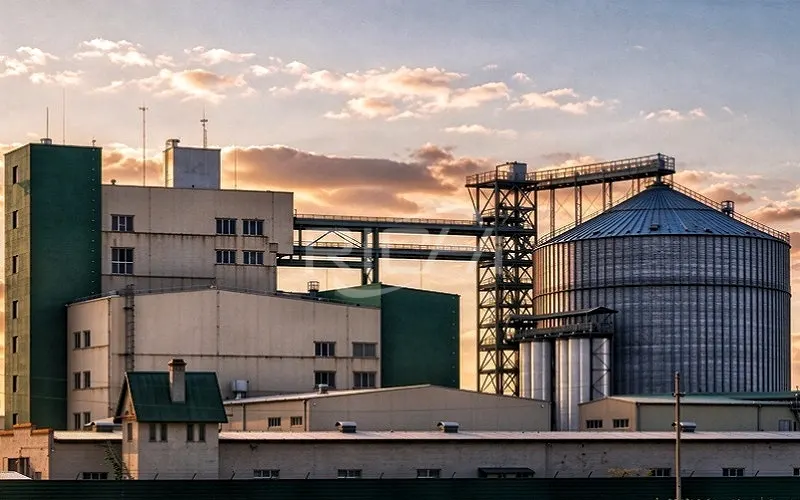
50–60 T/H Industrial Poultry Feed Pellet Plant
- Capacity : 50-60 T/H
- Investment Cost : 900,000-1,400,000 USD
- Installation Period : 110-140 Days
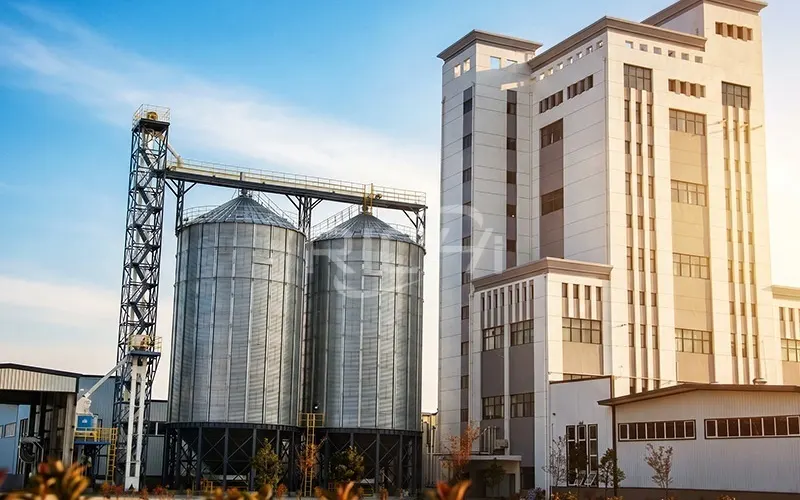
60–80 T/H Large Industrial Animal Feed Plant
- Capacity : 60-80 T/H
- Investment Cost : 1,450,000-1,800,000 USD
- Installation Period : 130-170 Days
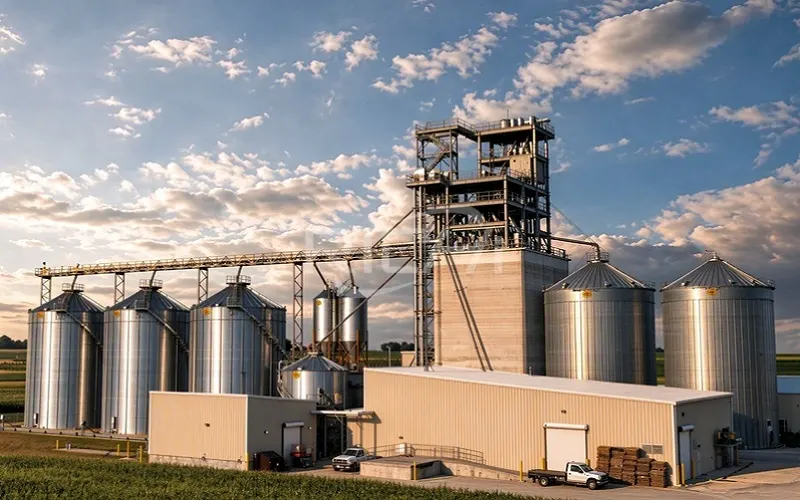
80–100 T/H Ultra-Large Industrial Poultry Feed Mill Plant
- Capacity : 80-100 T/H
- Investment Cost : 2,000,000-3,000,000 USD
- Installation Period : 160- 200 Days
Global Poultry Feed Mill Plant Projects
RICHI produces more than 10,000 units of equipment annually. To date, we have cooperated with customers in more than 140 countries and regions worldwide on pellet machines. Let’s look at how we customize poultry feed mill plant project solutions for different production needs.
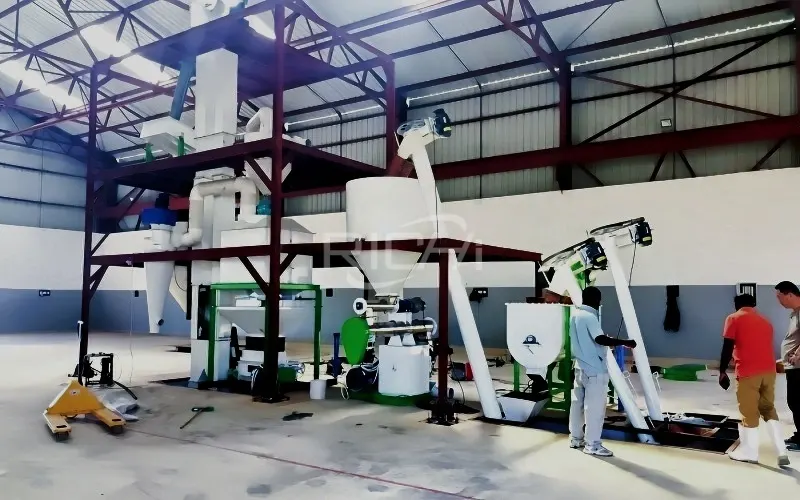
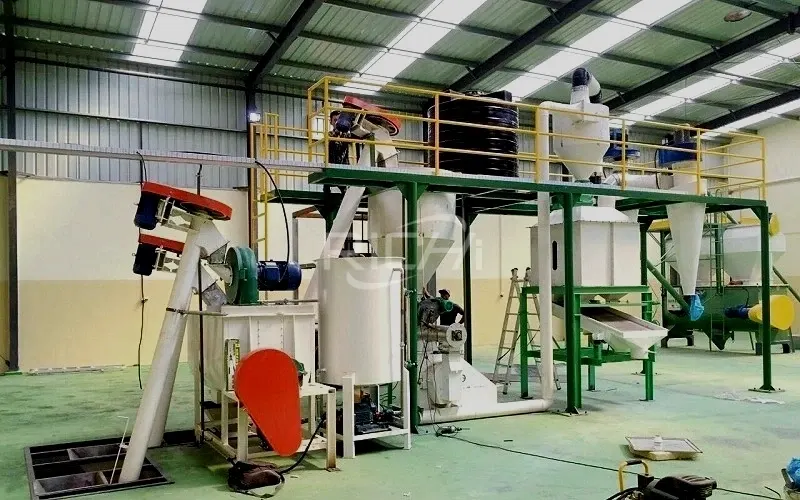
Poultry Feed Pellet Mill Project in Tanzania
Type: Chicken feed pellets, 1–6 mm
Capacity: 1–2 t/h
Configuration: Screw conveyor, hammer mill, mixer, pellet machine, cooling belt
Other Information: Installation period 10 days, 2 engineers on-site guidance, 2 operators, footprint 6 × 4 × 4.5 m
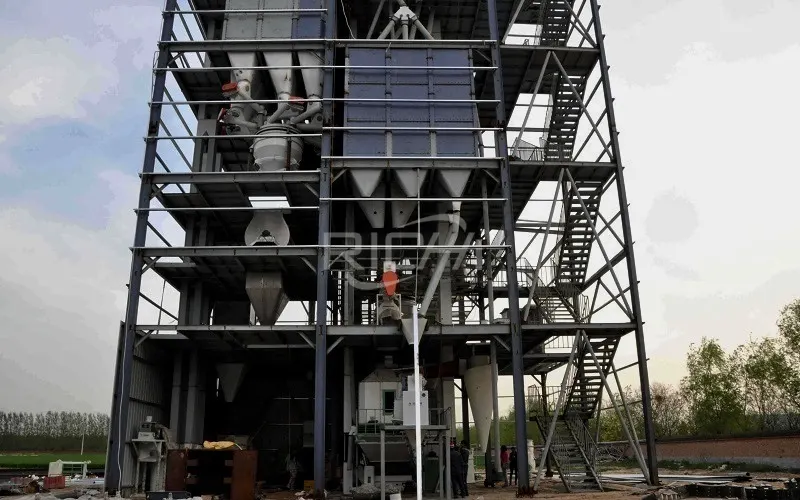
Poultry Feed Mill Plant Solution in Spain
Type: Turkey feed pellets, covering 4 growth stages — starter 3.5 mm, grower 5.0 mm, developer 6.5 mm, finisher 8.0 mm
Capacity: 15–18 t/h
Configuration: SZLH508 pellet machine, counterflow cooler, rotary grading sieve
Other Information: Also equipped with a fat coating machine for finisher feed; runs about 18 hours per day, 6 days per week
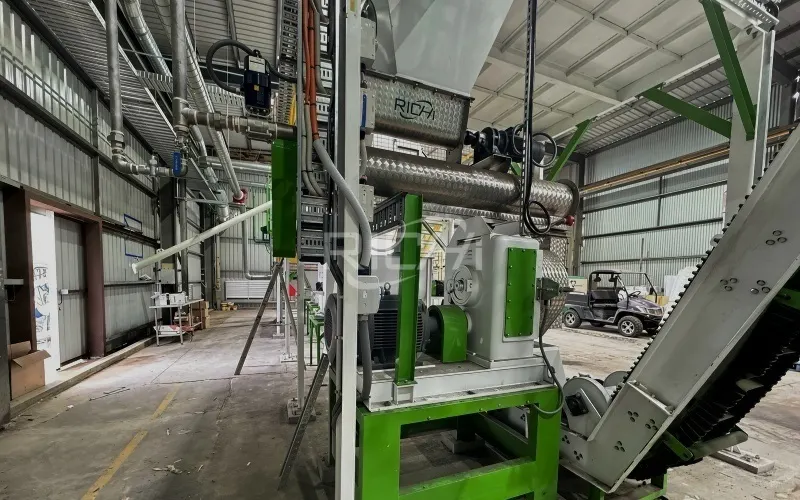
Poultry Feed Mill Project in Brazil
Type: Layer feed pellets (pellet size optimized to be smaller than broiler feed, balancing feed intake efficiency)
Capacity: 16 t/h
Configuration: Automated batching and weighing system (major ingredient accuracy 0.1%), hammer mill, twin-shaft paddle mixer, SZLH series pellet machine (with steam conditioning), counterflow cooler, screening equipment, packing and palletizing system
Other Information: The automated system supports formula storage and can quickly switch between chick feed, grower feed, and layer feed
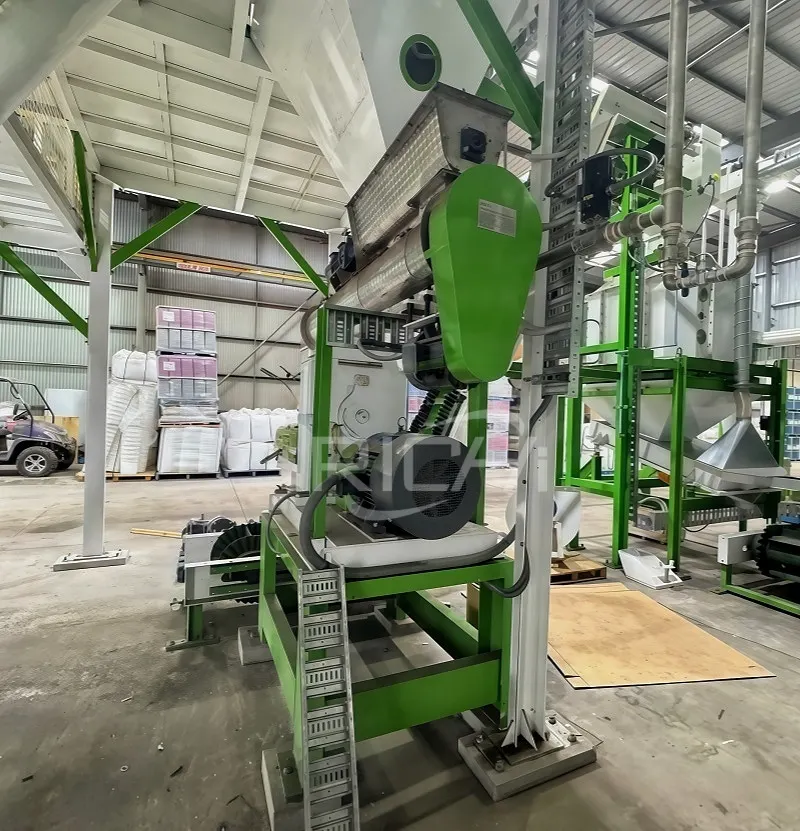
Chicken Feed Mill Project in Uzbekistan
Type: Chicken feed pellets, 2–6 mm, also produces mash feed
Capacity: 10–15 t/h
Configuration: 500-ton galvanized silo system, hammer mill, batching scale, mixer, ring die pellet machine, counterflow cooler, feed crumbler, screener, packing machine, boiler
Other Information: Footprint 35 × 20 × 25 m, energy consumption 520 kW/h, installation period 120 days
PREV
NEXT
What Our Poultry Feed Mill Plant Customers Say
After a project is completed, we regularly follow up with customers, and some customers also take the initiative to share their experience with us. Let’s see what they have to say.
Thank you for the expansion plan. The machines do not take up much space, but the capacity is up, and it is completely sufficient for us now.
David Mitchell
Feed Production Manager, Australia
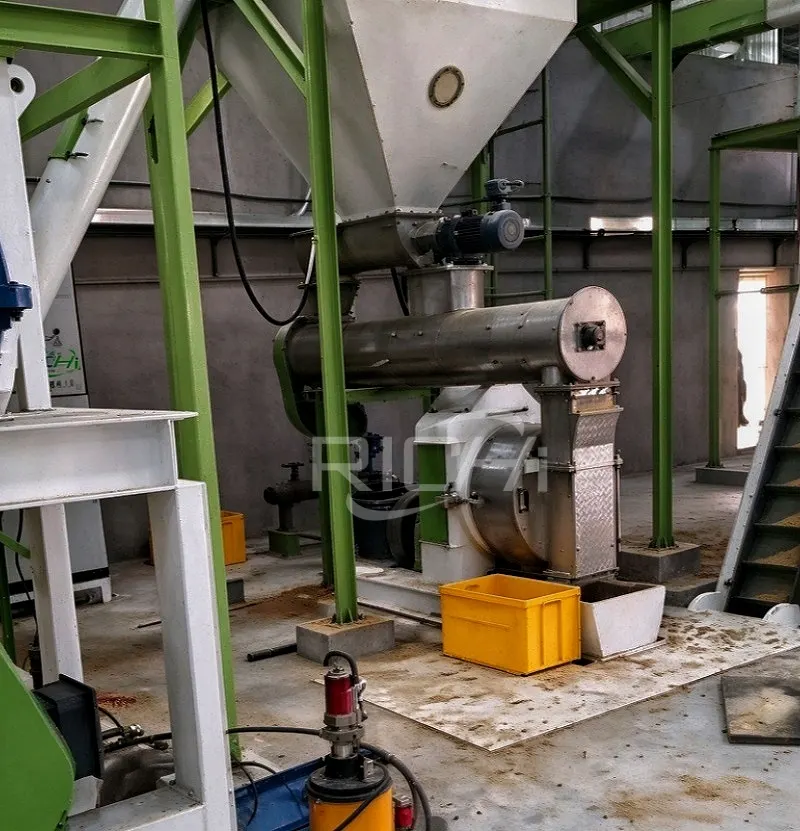
The budget was tight, and we compared several suppliers. It has been running for almost a year now with no major problems.
Ali Al-Balushi
Poultry Farm Owner, Oman
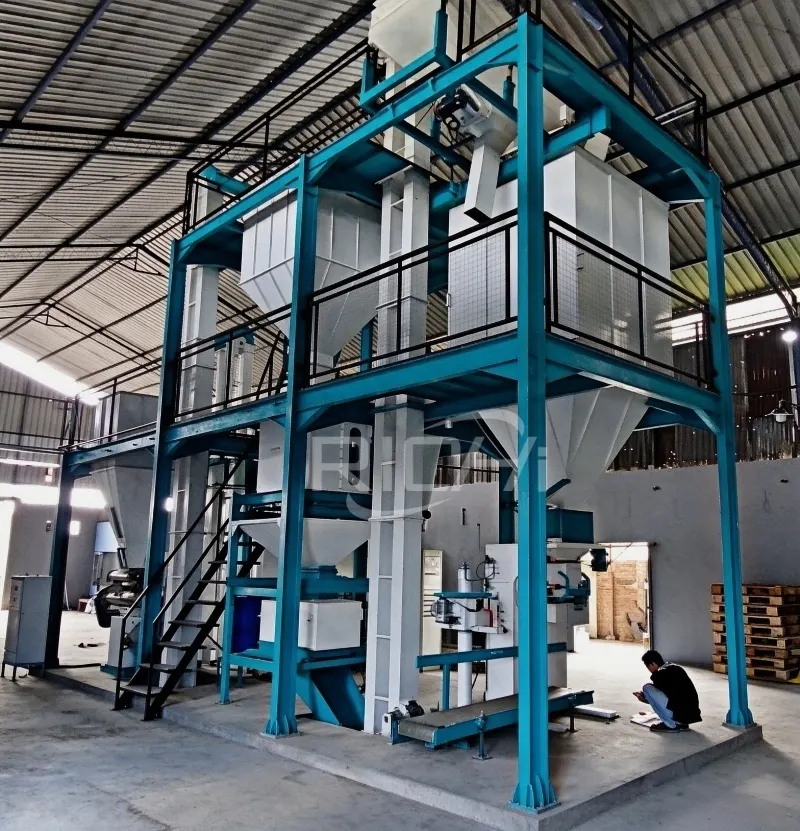
The SZLH250 line is quite simple to operate. For my several farms, it is completely sufficient.
Budi Santoso
Farm Owner, Indonesia
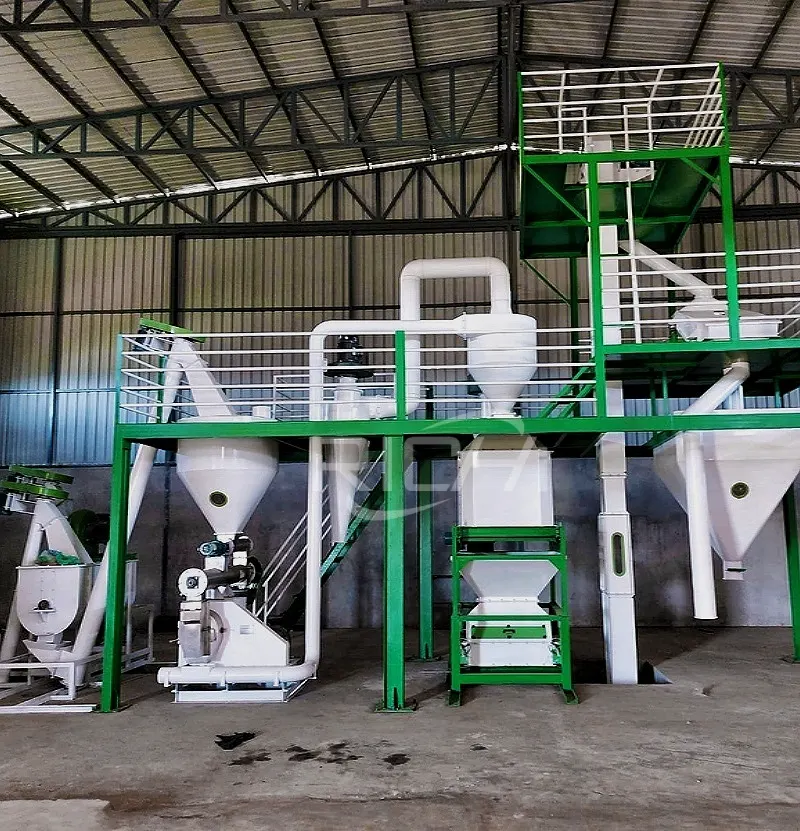
Our power supply is not very stable here, and the old equipment used to trip all the time. After switching to your machine, it is much better. We can sell the excess to nearby farmers.
João Manuel
Feed Plant Operations Manager, Angola

FAQs About Poultry Feed Mill Plant
The following questions are among the ones customers ask most often. We have put them together for your reference. You can also contact RICHI engineers directly for support.
Can I buy only individual machines and connect them to my existing feed plant equipment?
→
Of course. RICHI provides individual machines and supporting solutions that can be configured based on the specifications and interfaces of your existing equipment, ensuring that new and old equipment can connect. However, whether they can be directly connected depends on the model, capacity, and control system of your existing equipment. We suggest you send us a list of your current equipment, and our engineers will help you determine.
Do your machines have energy-saving designs? Will the electricity bill for a feed plant be very high?
→
Yes. RICHI equipment takes energy consumption into account in motor selection, transmission design, and control systems. Take a 10 t/h chicken feed production line project in Uzbekistan as an example. When the measured output reached 13 t/h, the operating current was only 85% of the motor’s rated current, and each ton of feed used about 20 kW·h less electricity than the industry average. Actual electricity costs depend on your capacity, raw materials, and shifts. We can provide a rough energy consumption estimate based on your plan.
I want to invest in a 5 t/h factory. How long does the production cycle take?
→
For a 5–7 t/h plant, the production cycle is generally about 20–40 days, depending on the equipment configuration and level of automation you choose. As a source manufacturer, we provide high-quality poultry feed mill plant machinery and ensure every machine leaving the factory meets quality standards such as ISO and CE.
The production cycle for a poultry feed production line ranges from 15–150 days. The larger the capacity requirement and the more complex the configuration, the longer the cycle.
How many workers are needed to invest in an automatic poultry feed mill plant?
→
An automatic plant can reduce manual operations through a centralized control system and supports one-button startup. Daily operation usually requires only 2–6 workers, distributed across the feeding inlet, premix addition, pelleting, and packing stages. The larger the capacity and the higher the level of automation, the fewer workers are needed per shift.
My budget is limited. How much does it cost to establish a small poultry feed factory?
→
For a 1–2 t/h small plant, the cost is generally USD 10,000–50,000. You can find more details in the “What Poultry Feed Mill Plant Capacity Do You Need” section above. If your raw materials are already well processed, you could consider buying only a poultry feed machine, which will significantly reduce your investment cost. You can also visit our poultry feed pellet machine price page for more detailed information.
Can I produce two types of feed at the same time? I plan to build a cattle and poultry feed mill plant. How do I switch between feeds?
→
Yes. Cattle and poultry feed differ greatly in formula and pellet size. We will prepare ring dies of different specifications for you during the design stage and adjust both sets of compression ratio parameters during installation. When switching feed, one worker can replace the ring die using a quick-release clamp and switch the formula and compression ratio on the control panel. RICHI has handled similar cases: one customer produces both chicken feed and sheep feed, and the entire switching process takes about half an hour.
How long is your warranty period?
→
One year. Equipment failures under normal use and not caused by human factors are covered by the warranty. After the warranty period, only parts costs are charged for repairs, and lifetime technical support is provided. If you want to learn more about installation, commissioning, training, and after-sales service, you can view our turnkey service page.

